Muhammad Amanullah | August 22, 2026
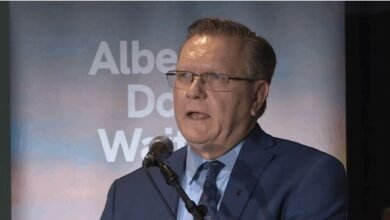
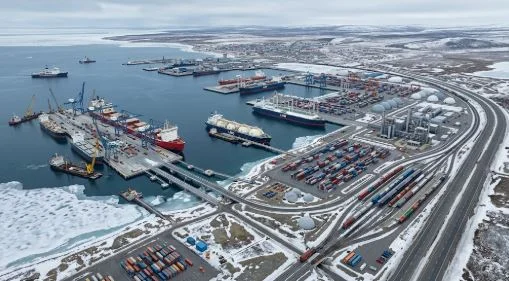
The True Post (Web News) — Manitoba Premier Wab Kinew says a major expansion of the Port of Churchill could cost between C$70 billion and C$80 billion. The proposed project would also include the construction of an offshore liquefied natural gas (LNG) terminal in Hudson Bay.
The Port of Churchill currently operates for roughly four and a half months of the year. However, recent studies have strengthened the possibility of extending the shipping season significantly through the use of specialized vessels capable of operating in icy waters.
The Manitoba government is now using the findings of those studies to encourage investors to support the expansion of the port, upgrades to the Hudson Bay Railway and the development of a northern trade corridor.
Year-Round Shipping Could Be Possible
Three recent studies examined whether commercial ships could operate year-round in Hudson Bay despite the presence of sea ice.
According to the studies, year-round shipping could potentially begin using technology that is already available, provided specially reinforced vessels and icebreakers are used.
Premier Kinew said the studies indicate that the Port of Churchill could operate throughout the year using existing technology and vessels that may be less expensive than previously expected.
However, the studies also emphasize that ice conditions in Hudson Bay are constantly changing. More field studies and marine trials will therefore be required before year-round shipping can be implemented on a practical basis.
Offshore LNG Terminal Proposed
The proposed expansion of the Port of Churchill includes an offshore LNG loading terminal in Hudson Bay.
Experts, however, say the existing entrance to the Port of Churchill is relatively narrow and shallow. This could make it difficult for large LNG tankers, particularly vessels reinforced to withstand sea ice, to enter and maneuver safely.
A feasibility study commissioned by the Arctic Gateway Group also identified the need for major dredging, changes to port infrastructure or the construction of an offshore loading facility before such vessels could be used.
$70 Billion to $80 Billion Cost Estimate
Premier Kinew estimates that the overall cost of the port expansion and related infrastructure could reach C$70 billion to C$80 billion.
The estimate reflects the enormous scale of the proposed project. In addition to an LNG terminal, the plan would involve port expansion, railway improvements, storage and loading facilities, vessels designed to operate in icy conditions and other supporting infrastructure.
For comparison, the LNG terminal in Kitimat, British Columbia, cost approximately C$40 billion to build and took about 12 years to complete.
The Kitimat terminal is located at the end of a long and relatively protected marine route, while a proposed offshore facility in Hudson Bay could face significantly more challenging weather and ice conditions.
Ice-Strengthened Ships Would Be Required
According to estimates from the Arctic Research Foundation, a vessel with a third-level ice-strengthening classification could cost approximately $280 million to $410 million, while a fourth-level vessel could cost roughly $100 million to $130 million.
These prices are significantly lower than those of large icebreakers capable of breaking through extremely thick and older Arctic Ocean ice.
If relatively lower-cost ice-strengthened commercial vessels prove sufficient for Churchill, the investment required for year-round shipping could therefore be substantially lower than the cost of operating conventional heavy-duty icebreakers.
Sea Ice Will Not Disappear Completely
Although rising global temperatures are expected to reduce sea ice in Hudson Bay, a separate research study has warned that sea ice will not completely disappear by the end of the century.
Research involving University of Manitoba sea-ice expert Feiyue Wang and other scientists found that even if global average temperatures rise by as much as 5°C above pre-industrial levels, sea ice would still remain in Hudson Bay.
Current climate projections, meanwhile, anticipate a global temperature increase of around 3.4°C over the same period.
This means a year-round shipping strategy cannot depend on Hudson Bay becoming completely ice-free.
More Research Needed
The Arctic Gateway Group worked with shipping company Fednav to examine how year-round access to the Port of Churchill could be achieved.
The study found that ice-strengthened commercial cargo vessels could potentially extend the shipping season using today’s technology, while year-round access could become increasingly feasible in the future.
However, Fednav identified Hudson Bay’s highly dynamic ice environment and the shallow, narrow approach to the Port of Churchill as major challenges.
The report recommended additional field studies, trial voyages and computer simulations to reduce the remaining uncertainties.
Indigenous and Local Communities
Premier Kinew said he hopes northern residents and Indigenous communities will view LNG shipping differently from oil transportation.
He suggested that people often think of LNG in a way similar to propane used for household barbecues and argued that the environmental consequences of an LNG leak or accident would not necessarily be the same as those associated with an oil spill.
However, a project of this scale would require further consultation about its environmental and local impacts, particularly in a region where sea ice, marine ecosystems and the interests of Indigenous and northern communities are closely connected.
Railway and Port Upgrades
The proposed expansion would extend beyond the LNG terminal and ice-strengthened vessels.
Arctic Gateway Group, which owns the port and Hudson Bay Railway, also plans to rebuild and upgrade the railway infrastructure.
The plans include railway lines capable of handling heavier freight trains, improved storage facilities at the port and expanded loading infrastructure.
The Arctic Gateway Group includes 29 First Nations and 12 remote northern Manitoba communities, making Indigenous and local partnerships an important component of the project.
Efforts to Attract Investors
Premier Kinew plans to travel to Toronto in September to present the Port of Churchill expansion proposal to potential investors.
Churchill Mayor Mike Spence, who also serves as chair of the Arctic Gateway Group, has urged investors to become involved in the project.
He also dismissed concerns about potential insurance challenges related to Arctic shipping, arguing that climate change is altering conditions and that the insurance industry will need to adapt to those changes.
Meanwhile, Manitoba representative in Prime Minister Mark Carney’s cabinet, Rebecca Chartrand, said it is too early to determine how much funding the federal government might provide for the Churchill expansion or when the project could be included on the list of projects considered to be of national importance.
Major Challenges Ahead
The expansion of the Port of Churchill could potentially transform Manitoba into an important trade route between North America and Europe.
However, the estimated C$70 billion to C$80 billion cost, challenging ice conditions, the port’s narrow entrance, construction of an LNG terminal and environmental and Indigenous concerns make the proposal an extremely complex infrastructure project.
Recent studies have increased confidence in the possibility of year-round shipping, but the reports themselves emphasize that further research and real-world testing are still required.
Turning Churchill into a major year-round commercial port may therefore be possible, but making that vision a reality would require massive investment, advanced technology and a careful balance between economic development, environmental protection and the interests of local and Indigenous communities.
sorce news
Churchill Falls Agreement Referendum Cancelled as Newfoundland Premier Cites Political Situation