Muhammad Amanullah
Date: October 14, 2026
The True Post (Web News) —
The debate over Alberta’s possible separation from Canada has revived comparisons with Britain’s decision to leave the European Union, bringing the political and economic consequences of Brexit back into focus.
Ian Cooper, a researcher who studies the political and economic effects of Brexit, has identified several similarities between the two situations after attending a meeting organised by a group advocating Alberta’s independence.
Cooper, a senior research fellow associated with Dublin City University’s Brexit Institute, said the debate unfolding in Alberta ahead of its referendum reminded him of the atmosphere in Britain before the Brexit vote.
Born in Saskatchewan and raised in Alberta, Cooper studies the political and economic consequences of the United Kingdom’s departure from the European Union.
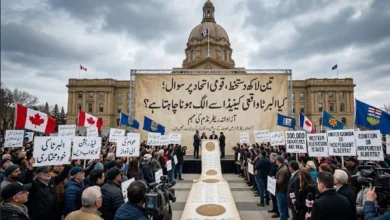
In August, he visited Rimbey, a community in central Alberta, where the Alberta Prosperity Project, an organisation supporting separation, held a public meeting.
According to Cooper, a large number of farmers attended the gathering. Their questions focused on how agricultural policy would operate if Alberta became an independent country.
He described the atmosphere as calm and respectful, saying attendees had an opportunity to raise their concerns and ask questions.
Similarities With Brexit
At the meeting, Cooper listened to speeches by several speakers, including Mitch Sylvester, chief executive of the Alberta Prosperity Project. Cooper also praised Sylvester’s ability to address a public audience.
However, Cooper said the messages delivered by separation advocates reminded him of Britain’s Brexit campaign.
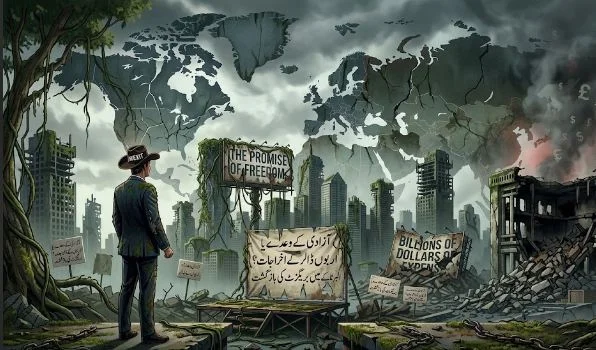
He argued that leaders advocating independence can create the impression that becoming a separate country will resolve all existing problems. Such campaigns, he suggested, often emphasise potential benefits while giving comparatively less attention to possible disadvantages.
Cooper said a similar approach had been evident in Britain’s campaign to leave the European Union. After voters supported Brexit, the country had to confront the practical challenges and complexities of implementing that decision.
In 2016, the United Kingdom voted to leave the European Union. The decision was followed by a complicated political, trade and administrative process as Britain negotiated its departure and established new arrangements with the bloc.
Cooper believes Alberta should examine the potential consequences of independence in detail before voters make a decision. In his view, making a choice based primarily on promises could mean overlooking difficulties that emerge later.
What Do Separation Supporters Say?
Mitch Sylvester, head of the Alberta Prosperity Project, disagrees with treating Brexit and Alberta’s proposed separation as equivalent situations.
He argues that Alberta is rich in natural resources and believes its economic future would depend substantially on whether markets remained available for its products.
As long as demand and access to markets continued, Sylvester said, Alberta could continue producing and selling its resources.
He also argued that the province’s natural wealth would make it largely self-sufficient, expressing confidence that Alberta could manage its affairs if it became an independent country.
Under the referendum process scheduled for October 19, voters are being asked to consider whether Alberta should remain part of Canada or move towards a second, binding referendum on separation.
The current vote will not itself deliver a final decision on independence. Instead, it concerns whether the province should proceed towards a future referendum in which voters could directly decide whether Alberta should leave Canada.
That distinction is central to the debate: a vote supporting the next step would not automatically establish an independent Alberta.
The Price of Independence
Several organisations have published estimates of the potential financial consequences of Alberta becoming independent. Their projections differ substantially.
In September, the University of Calgary’s School of Public Policy estimated that establishing a new country could cost between C$50 billion and C$170 billion during the first five years following separation.
The report examined different possible scenarios, including a relatively smooth transition involving favourable negotiations with Canada and a more difficult process involving prolonged and less favourable negotiations. The estimated costs include the requirements of establishing new institutions and infrastructure, staffing the transition and addressing Alberta’s share of federal debt.
The report also acknowledged that estimating the longer-term financial consequences would be difficult because the outcome would depend on negotiations, economic conditions and decisions made by governments and institutions.
The Alberta Transition Council, an organisation supporting independence, offered a much lower estimate in its September reports. It put the one-time transition cost at approximately C$5 billion and projected that an independent Alberta could have an annual budget surplus of between C$22.2 billion and C$32.1 billion after covering the costs included in its financial model. <Cite refs={[“turn118384search0″,”turn118384search4″,”turn118384search5”]}/>
These figures are estimates produced by different organisations using different assumptions. They should not be treated as directly equivalent calculations or as guaranteed outcomes. The significant difference between them illustrates the continuing disagreement over the economic implications of separation.
Lawyer Keith Wilson, associated with the Alberta Transition Council, has also rejected the Brexit comparison.
Wilson argued that Britain was moving away from Europe, which he described as its largest market. In contrast, he said Alberta’s independence project would bring the province closer to the United States.
He described the US as Alberta’s largest market and one of the biggest markets in the world, suggesting that geographical and commercial relationships would distinguish Alberta’s situation from Britain’s departure from the European Union.
The Real Test Comes After the Referendum
Another separation advocate, Cory Morgan, said Alberta could learn important lessons from the Brexit experience. Morgan leads the Pathway to Independence organisation, which campaigns publicly on the issue.
Morgan argued that even if voters supported separation, the most difficult work would begin afterwards.
Referring to Britain, he said political leaders had not given sufficient attention to managing the practical process after securing the referendum result.
His central argument was that winning a referendum does not guarantee the successful implementation of the policy it endorses. Political leaders must subsequently deal with administrative responsibilities, negotiations and the practical challenges of delivering on their commitments.
For Alberta, those challenges could include establishing the functions of an independent state, determining its relationship with Canada, maintaining access to important markets and deciding how existing public services and financial obligations would be managed.
The precise arrangements would depend on the terms of any future negotiations and the decisions made during a transition.
David Cameron Disagrees With the Comparison
Former British prime minister David Cameron also rejected the comparison between Brexit and Alberta’s referendum during an energy conference in Calgary in September.
Cameron argued that the two situations were fundamentally different. Brexit concerned Britain’s membership in the European Union, whereas Alberta’s debate involves the future of a province within an existing sovereign country.
Cooper acknowledged that distinction but argued that Cameron’s assessment overlooked an important question: the role of political leadership in creating and managing a referendum.
Referring to the circumstances surrounding Britain’s Brexit vote, Cooper said Cameron had promised a referendum partly to satisfy members of his own political party, even though Cameron himself campaigned against leaving the European Union.
For Cooper, this aspect of the Brexit experience is relevant to Alberta because political leaders must consider not only the promises made before a referendum but also the responsibilities that follow a public decision.
The campaign in Alberta is therefore about more than whether independence is desirable in principle. It also raises questions about how leaders would turn that objective into a workable political and economic arrangement.
Supporters of Alberta’s independence emphasise the province’s natural resources, economic potential and access to the US market. Critics point to the possible costs, economic disruption and complexity of establishing a new country.
Brexit has become an important reference point in this debate, but Alberta’s future will depend on its own political choices, economic circumstances and any negotiations with the Canadian federal government.
As the October 19 vote approaches, the central question remains whether the potential benefits presented by separation advocates would outweigh the financial, legal and practical challenges of independence.
Whatever the outcome, the experience of Brexit offers a reminder that a referendum result is only one stage of a much longer political process.