Muhammad Amanullah
Date: October 15, 2026
The True Post (Web News) —
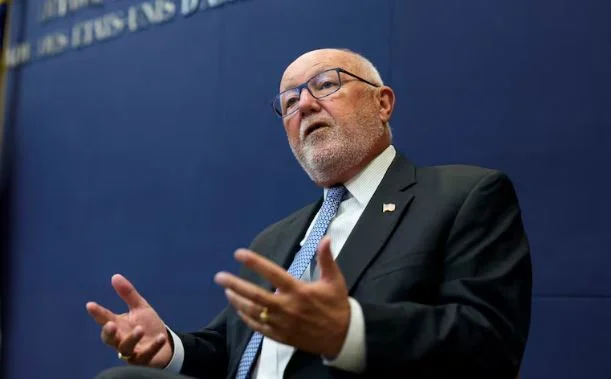
WASHINGTON — U.S. Ambassador to Canada Pete Hoekstra has warned Canadian politicians against actions that Washington could interpret as interference in American elections, saying U.S. officials are closely monitoring political activities in Canada ahead of the November midterm elections.
In a recent interview on The Really Big Show podcast, Hoekstra said that certain statements and political activities by Canadian leaders could be viewed as attempts to influence American electoral politics. He pointed to Ontario’s advertising campaign opposing U.S. tariffs, as well as comments by Canada’s Industry Minister Mélanie Joly and former prime minister Justin Trudeau.
Hoekstra warned that the United States would respond if Canadian activities were determined to constitute election interference. His remarks have added another point of tension to an already strained relationship between the two neighbouring countries, which have been engaged in disputes over tariffs, trade negotiations and political rhetoric.
Trump Ended Trade Talks After Ontario’s Advertising Campaign
The dispute over political advertising dates back to October 2025, when Ontario aired a television advertisement during the World Series featuring excerpts from former U.S. president Ronald Reagan criticizing tariffs and supporting free trade.
The campaign, backed by Ontario Premier Doug Ford, challenged the Trump administration’s tariff policies and sought to highlight their potential economic consequences for American consumers and businesses.
U.S. President Donald Trump reacted angrily to the advertisement and halted trade negotiations with Canada. The episode became a prominent flashpoint in bilateral relations, reflecting the growing disagreement between Washington and Ottawa over trade policy.
Hoekstra said the campaign could be interpreted as political interference from the American perspective. His comments, however, did not establish that the advertising campaign had violated U.S. election laws.
Trump Renews His 51st-State Remark
Trump has also continued to make controversial statements about Canada’s relationship with the United States.
Speaking at a rally in Bullhead City, Arizona, on Wednesday, the president again suggested that Canada would eventually become the United States’ 51st state. He argued that such an arrangement would be the only way to make the relationship work, while criticising Canadian dairy trade policies.
Trump also referred to his decision to rename the American portion of Lake Ontario, adding to a series of remarks that have drawn criticism in Canada.
Canadian leaders have repeatedly defended the country’s sovereignty in response to Trump’s statements. The comments have contributed to wider concerns about the future of Canada-U.S. relations as both countries navigate continuing economic and political disagreements.
Trudeau’s Criticism of Trump’s Trade Policies
Hoekstra also referred to comments made by former Canadian prime minister Justin Trudeau during a discussion at Brown University on September 22.
During the event, Trudeau criticised the Trump administration’s trade policies, arguing that measures driving up costs for American consumers were not necessarily improving outcomes for the United States.
He described Canada as one of America’s oldest and best allies and questioned why Washington was pursuing a trade dispute with a neighbouring country with which it has long maintained close economic and security ties.
Trudeau’s remarks came amid continuing disagreements over tariffs and the economic consequences of the Trump administration’s approach to international trade.
Hoekstra suggested that such public statements could be viewed as attempts to influence American politics in the period leading up to the midterm elections.
Mélanie Joly Rejects the Allegation
Canadian Industry Minister Mélanie Joly rejected the suggestion that Canada was interfering in American elections.
Responding to the controversy on Wednesday, Joly said Canada would not interfere in the domestic political affairs of another country and would not accept similar interference in its own political system.
She explained that her recent visits to the United States were intended to encourage American companies to invest in Canada. According to Joly, her discussions involved representatives from both the Democratic and Republican parties.
Joly said she expected to announce positive developments involving investment by American companies in Canada and intended to continue pursuing that strategy in the United States and other international markets.
Her response underscored Ottawa’s position that diplomatic engagement, trade advocacy and efforts to attract investment should not automatically be equated with election interference.
November Midterms Could Reshape Congress
The United States will hold its midterm elections on November 3, 2026. All seats in the House of Representatives and approximately one-third of the Senate seats will be contested.
Republicans currently control both chambers of Congress, but Democrats are seeking to regain control. The outcome will influence the remainder of Trump’s presidential term, including the administration’s ability to advance legislation and implement its domestic agenda.
With several closely contested races expected to attract national attention, statements and actions involving foreign governments are likely to face heightened scrutiny.
The election campaign has also intensified political debate over trade, employment and the economic effects of tariffs, particularly in states with industries closely connected to Canadian supply chains.
Alberta Separatism Adds to Bilateral Tensions
Concerns about political connections between American figures and Canadian separatist movements have also surfaced in recent months.
Media reports have indicated that Republican political operatives were involved in activities associated with Alberta’s separatist movement earlier this year. Reports have also described meetings in Washington involving Alberta separatists seeking engagement with U.S. officials.
These developments have raised questions about the extent of American political involvement in Canadian domestic affairs, although the reported contacts do not by themselves establish that the U.S. government is formally supporting Alberta’s separation from Canada.
The issue has added another sensitive dimension to relations between the two countries, particularly as Canadian officials continue to emphasise national unity and sovereignty.
Trade Negotiations Remain at an Impasse
Trade disagreements remain central to the broader dispute.
In August, Canadian Prime Minister Mark Carney directed Canada’s negotiating team to suspend trade talks with the United States, accusing American negotiators of making unreasonable demands during discussions.
The breakdown in negotiations followed months of disagreements over tariffs and the terms of a potential trade arrangement. Both governments have faced pressure from businesses and workers concerned about the impact of trade restrictions on cross-border commerce.
Hoekstra’s latest warning signals that disagreements between the two countries are no longer limited to tariffs and trade negotiations. They have increasingly extended into political messaging, diplomatic engagement and questions about the boundaries of acceptable conduct during an election campaign.
Canada has rejected the allegation that it intends to interfere in American elections, while the United States has warned that it will respond if it determines that Canadian activities cross that line.
With the November 3 midterms approaching, the issue is likely to remain a source of friction between Washington and Ottawa, two countries whose economies and security interests remain closely interconnected.