Muhammad Amanullah
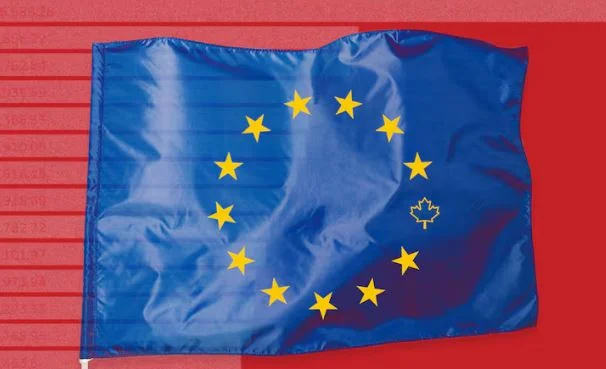
Date: September 18, 2026 The True Post (Web News) —The European Union has proposed developing a new and deeper relationship with Canada that could open the way for the country to become the bloc’s first “associate member,” marking a potential new phase in economic, security and strategic cooperation between Canada and the 27-member European Union.
The proposal was put forward by European Commission President Ursula von der Leyen during her State of the European Union address in Strasbourg on September 16. She called for Canada and the EU to move beyond their existing trade relationship and develop a much broader alliance for the future.
The initiative comes as Canada and European countries seek to strengthen economic and strategic partnerships and reduce vulnerabilities in critical supply chains.
EU Proposal for a New Partnership
Von der Leyen said Canada and the European Union should rethink their partnership and explore cooperation beyond the existing Canada-EU Comprehensive Economic and Trade Agreement, or CETA.
The proposal would create a new framework for closer cooperation between Canada and the EU across strategic sectors rather than limiting the relationship primarily to trade.
According to Canadian government statements, the proposed partnership could cover critical minerals, defence industrial capacity, artificial intelligence and computing, energy security, space, financial services and digital trade.
The exact legal structure of an “associate member” relationship has yet to be negotiated and defined.
Carney Welcomes Closer Ties With Europe
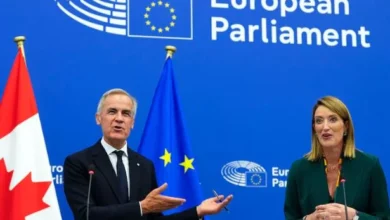
Prime Minister Mark Carney welcomed von der Leyen’s proposal during his visit to Strasbourg and subsequently outlined Canada’s vision for a deeper relationship with Europe.
Addressing the European Parliament on September 17, Carney said Canada and Europe should build greater strategic autonomy through cooperation in areas including critical minerals, defence, AI and computing, energy security, space and financial payments.
He also proposed moving toward more seamless digital trade in non-agricultural goods and a wide range of services.
Carney said the relationship could eventually include deeper people-to-people links, giving young Canadians and Europeans greater opportunities to live, work and study on either side of the Atlantic.
Sovereignty and Strategic Autonomy
Sovereignty has emerged as a central theme in Canada’s push for closer European ties.
In his European Parliament speech, Carney argued that modern sovereignty requires countries to have resilient access to strategic capabilities, including energy, critical minerals, AI, semiconductors, payment systems and space-based communications.
He said Canada and Europe have complementary strengths that could be combined to improve their resilience in a changing global environment.
Canada brings significant energy resources, critical minerals and capabilities in areas such as AI, quantum technology and space, while Europe offers a large market, research capacity, advanced manufacturing and a substantial industrial base.
What Would “Associate Member” Mean?
The proposed “associate member” status would not be the same as full EU membership.
Canada is not a European country and would not become a full member of the European Union under the bloc’s existing accession framework. Instead, the proposal would require a distinct arrangement defining the rights, responsibilities and areas of participation available to Canada.
At this stage, the precise legal and institutional structure of the proposed status has not been finalized.
The Canadian government has described the concept as a new type of alliance that Canada and the EU would develop together rather than as conventional EU membership.
Cooperation Beyond Trade
Canada and the European Union already have extensive economic ties through CETA, but both sides are now discussing cooperation across a much wider range of sectors.
The European Union is Canada’s second-largest trading partner for goods and services. Canadian government figures put the value of two-way trade at approximately $178 billion in 2025. The EU is also Canada’s second-largest source of foreign direct investment after the United States.
The proposed expansion of the relationship could therefore have implications for investment, supply chains, technology and industrial cooperation.
Critical Minerals and Artificial Intelligence
Critical minerals are expected to be one of the most important areas of future Canada-EU cooperation.
Canada has significant deposits of critical minerals used in batteries, semiconductors, electric vehicles, clean-energy technologies and defence industries.
Carney said Canada could help address Europe’s need for reliable supplies while benefiting from European expertise and investment in advanced processing and manufacturing.
Artificial intelligence and computing are also expected to become major areas of cooperation.
Canada and Europe could work together on AI safety standards, common rules, secure computing capacity and the development of AI applications.
Defence and Energy Cooperation
Defence is another major component of the proposed partnership.
Canada became the first non-European country to join the European Union’s Security Action for Europe, or SAFE, initiative in February 2026. The Canadian government says participation is intended to strengthen defence cooperation and create opportunities for Canadian defence industries.
Energy security is also part of the proposed alliance.
Carney said Canada could contribute energy resources, including LNG and hydrogen, while Europe could provide expertise and technologies in areas related to the clean-energy transition.
Research, Education and Financial Services
The proposed relationship could extend beyond conventional economic and security cooperation.
Carney suggested Canadian participation in European education and research programs, including Erasmus+ and the next generation of Horizon, which could provide opportunities for students, researchers and universities on both sides of the Atlantic.
He also proposed exploring a more integrated financial-services market between Canada and Europe.
Such cooperation could potentially increase access to capital, broaden consumer choice and strengthen financial links while maintaining the existing regulatory and financial systems.
Canada and Europe Enter a New Phase
The proposal remains at an early stage, and the details of any associate-member arrangement will require further negotiations between Canada and the European Union.
However, both sides have signalled an interest in moving beyond a relationship centred primarily on trade.
The Canadian government says the partnership is already expanding through cooperation in defence, critical minerals, energy, technology and security. Canada and the EU are also scheduled to hold a Canada-EU Summit on October 29 and 30, 2026.
If the two sides develop a workable framework, the proposed arrangement could create a broader Canada-EU partnership covering trade, investment, defence, energy, technology, research and strategic supply chains.
For now, the “associate member” concept remains a proposal rather than an established EU status, with its legal and practical details still to be worked out.