Muhammad Amanullah
Date: November 5, 2026
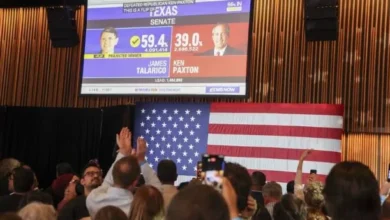
The True Post (Web News) Hopes of easing trade tensions between Canada and the United States have increased following the Democratic Party’s historic victories in the 2026 US midterm elections, with Alberta’s business community expressing optimism that American tariffs could eventually be rolled back.
Business organizations and industry representatives in Alberta have described the election results as a positive development, suggesting that Democratic control of Congress could increase pressure on President Donald Trump to reconsider his trade policies.
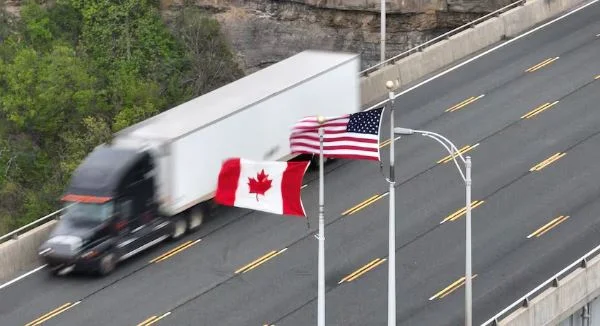
The tariffs imposed on Canada and other major trading partners have affected cross-border business operations, increased costs for companies and created uncertainty for manufacturers, exporters and consumers.
Alberta Premier Danielle Smith welcomed the political developments, saying the results reinforced her government’s longstanding position that tariffs are harmful to businesses and economic activity on both sides of the border.
She expressed hope that the election outcome could create an opportunity to improve Canada-US relations and address outstanding trade disputes.
Democrats Signal Efforts to Challenge Trump’s Tariffs
Following their electoral victories, Democratic leaders began signalling their intention to challenge Trump’s trade policies.
California Democratic Congressman Ted Lieu said lawmakers would pursue efforts to eliminate what he described as Trump’s unwise tariffs, arguing that the measures were increasing costs for American consumers.
Canadian businesses have also been closely monitoring developments in Washington.
The Canadian Federation of Independent Business (CFIB) described the election results as an important message about the economic consequences of the current trade policies.
Jasmin Gignac, the organization’s vice-president of national affairs, expressed hope that the political shift would increase pressure on the US administration to reconsider its tariff approach and restore stronger free-trade relations between Canada and the United States.
For Canadian businesses, the main concern is not limited to the direct cost of tariffs. Uncertainty surrounding customs procedures, exemptions and cross-border regulations has also made it more difficult to plan shipments, manage inventory and maintain competitive prices.
Alberta Company Faces Higher Costs and Lost US Sales
One Alberta business experiencing the effects of the trade dispute is Calgary-based Goose Menus.
According to co-owner Josh Galunas, the direct impact of tariffs on the company’s products was relatively limited. However, additional administrative requirements, customs procedures and complicated shipping arrangements increased operating expenses.
He said the introduction of tariffs initially created considerable uncertainty, particularly regarding exemptions and how the new measures would be implemented.
The additional costs eventually forced the company to increase prices for its American customers.
Galunas explained that US customers once accounted for approximately 70 per cent of the company’s total sales. That share has since fallen to between 10 and 20 per cent.
Some American customers have postponed larger purchases after cross-border orders became more expensive.
He said several customers contacted the company to explain that the increased cost of orders had forced them to delay purchases until trade tensions eased.
The experience highlights how trade disputes can affect small and medium-sized businesses even when their products are not directly subject to the highest tariff rates.
Immediate Policy Changes May Be Difficult
Despite optimism among Alberta businesses, experts caution that the Democratic victories do not necessarily mean American tariffs will disappear immediately.
Carlo Dade, director of international policy and the New North America Initiative at the University of Calgary’s School of Public Policy, said the US president has been granted significant authority to impose tariffs under legislation approved by Congress over several decades.
According to Dade, Trump has repeatedly used these existing legal powers to introduce tariffs under specific circumstances.
As a result, a change in congressional political control does not automatically mean the administration’s trade policies will be reversed.
Congressional opposition could create additional political and legislative pressure, but removing or changing certain tariff measures may require further legal and political action.
This means Canadian businesses may have to continue dealing with trade uncertainty even after the American midterm elections.
Businesses Hope for a Return to Normal Cross-Border Trade
Despite the uncertainty, Alberta’s business community remains hopeful that improved Canada-US relations could eventually restore confidence in cross-border commerce.
For exporters, manufacturers and smaller companies, more predictable trade rules would make it easier to manage costs, maintain customers and plan future investments.
Galunas said Canadian customers have helped offset some of the decline in American sales, but restoring normal cross-border trade would make business operations considerably easier and more profitable.
The latest developments have highlighted the importance of maintaining strong economic ties between Canada and the United States, particularly for Alberta businesses that depend on access to American customers.
While the Democratic victories have created renewed optimism, the future of the trade relationship will depend on decisions made in Washington and the willingness of both countries to resolve their outstanding disputes.
For Alberta businesses, the priority remains clear: reducing uncertainty, lowering cross-border costs and restoring a predictable trading environment that supports jobs and economic growth.