Muhammad Amanullah
Date: September 29, 2026 The True Post (Web News) —Trade tensions between the United States and Canada have entered a new phase following the implementation of restrictions on certain Canadian products by the administration of US President Donald Trump shortly after midnight on Tuesday. The move has added further strain to an already serious trade dispute between the two countries.
The new restrictions come at a time when negotiations between Canada and the United States over a new trade agreement have also stalled.
Scope of the New Restrictions
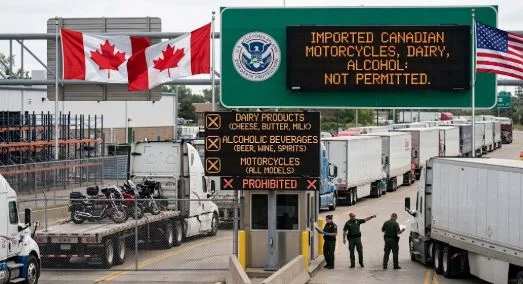
Under five announcements issued by the White House, several products imported from Canada have been barred from entering the US market. These include beer, wine, cider, whisky, rum, gin, vodka, brandy, tequila, motorcycles, molasses, whey and whey-based products, as well as non-alcoholic beer.
The restrictions represent an additional setback for Canadian businesses in these industries, many of which have already faced months of tariffs, uncertainty and concerns about access to the US market.
How Much Will the Economy Be Affected?
Although the new restrictions have raised concerns in Canada, available trade figures suggest that their immediate impact on the overall national economy may remain limited. Canadian exports of dairy products and motorcycles to the US market are relatively small.
Alcoholic beverages present a different situation because Canada exports substantial quantities of these products to the United States. Approximately $1.2 billion worth of alcoholic beverages entered the US market from Canada last year, meaning companies and producers in this sector could face comparatively greater pressure.
What Is the Main Objective?
According to economic analysts, the significance of the new restrictions lies not only in the value of the affected products but also in the political and trade message being sent by Washington.
The restrictions took effect after Canada had already introduced retaliatory measures in response to US tariffs.
The US administration’s position is that such measures send a message to Canada and other countries that may consider retaliating against American trade policies.
Trump Takes a Firm Position
President Donald Trump has indicated during the dispute that he believes Canada will eventually return to the negotiating table with the United States.
According to his position, Canada may seek the removal of US tariffs, while Washington would pursue an agreement that it considers fair.
These statements suggest that the US administration is currently seeking to maintain its negotiating leverage rather than reduce pressure on Canada.
Is Canada Also Standing Firm?
The Canadian government, meanwhile, has maintained that it is prepared to reach an agreement with the United States but is not willing to accept a deal at any cost.
Canadian officials have said the government’s priorities include protecting domestic workers and businesses, strengthening the country’s economic capacity and expanding trade partnerships in international markets beyond the United States.
This approach indicates that Ottawa is also placing importance on alternative trade opportunities as it seeks to reduce its dependence on the US market.
Tariff Dispute Has Already Intensified
The current trade dispute between the United States and Canada intensified after Donald Trump returned to office for a second term in 2025.
The two countries have already imposed tariffs affecting several sectors, including steel, aluminium, automobiles and lumber.
Following the failure of negotiations in August, the United States imposed 50 per cent duties on approximately $28 billion worth of Canadian products. Canada responded by introducing retaliatory tariffs on American goods.
The Next Phase Will Depend on Negotiations
The key question now is whether the latest restrictions will bring the United States and Canada closer to a new trade agreement or prolong the dispute.
The two economies maintain deep trade ties, meaning a prolonged period of trade tensions could affect more than specific industries. The consequences could extend to business investment, employment and consumers.
Under the current circumstances, continued pressure, retaliatory measures and parallel negotiations appear likely to remain central to the dispute rather than an immediate comprehensive agreement.
For Canada, the challenge is to protect access to the US market while strengthening its trade independence and developing alternative international partnerships. Washington’s approach, meanwhile, appears focused on maintaining pressure during negotiations in an effort to secure its trade demands.
Although the latest US restrictions may not be enough to significantly disrupt Canada’s entire economy, they represent another sign that the trade dispute between the two countries could deepen, with prolonged negotiations potentially taking the place of an immediate settlement.