Muhammad Amanullah
Date: October 13, 2026
The True Post (Web News) —
Four years after the killing of Punjabi singer and rapper Sidhu Moose Wala, his digital return to the stage through hologram technology in Canada has drawn fresh attention to the entertainment industry’s evolving use of digital performances.
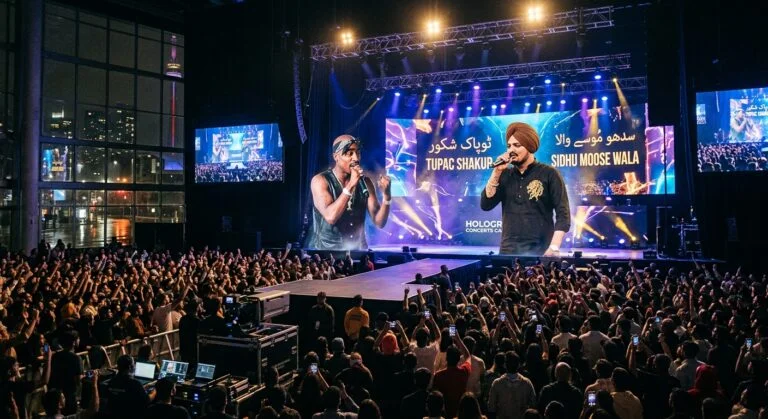
The late singer’s “Signed to God Hologram World Tour” reportedly opened on October 9, 2026, at Scotiabank Arena in Toronto. A three-dimensional digital representation of Moose Wala performed for fans, offering audiences a chance to experience his music through technology.
Moose Wala was shot dead on May 29, 2022, in Punjab’s Mansa district in India. Despite his death, his music continues to attract a large following. The Toronto show has also highlighted a growing trend in which digital technology is used to bring deceased performers back to the stage in a virtual form.
High Ticket Prices Attract Attention
Ticket prices for the Canadian concert have become a talking point among fans and entertainment observers. Some tickets advertised online reportedly reached nearly C$2,000 before taxes and additional fees, while fans who purchased tickets earlier paid considerably less.
Ravinder Sidhu and his sister, Nav, travelled from India to Toronto to see Moose Wala’s digital performance. They bought tickets for C$550 each.
Another fan, Harry Singh, said he paid C$270 for his ticket, in addition to the cost of travelling from California to Canada. He said a similar ticket appeared to be listed for around C$1,500 closer to the event.
The prices illustrate the commercial potential of digital concerts featuring popular artists who are no longer alive, particularly when demand remains strong among devoted fans.
Fans Sing Along to the Digital Performance
The concert featured Moose Wala’s digital likeness alongside several guest performers. Fans sang along to his songs and recorded videos of the performance on their mobile phones.
According to Singh, the show also included an unreleased track titled “Rebirth.” The appearance of the late singer’s younger brother on stage was another notable part of the event.
For many attendees, the concert offered more than a music performance. It provided an opportunity to reconnect with an artist whose work continues to hold emotional significance for fans around the world.
Vancouver Show Scheduled for October 15
Following the Toronto performance, the next concert on the hologram tour is scheduled for October 15 in Vancouver. Calgary and other locations are also expected to feature in subsequent stages of the tour.
The events are likely to offer organisers an indication of how much fans are willing to pay to see a favourite deceased artist represented digitally. Ticket demand, audience response and the cost of producing these performances could help shape the future of hologram-based entertainment.
New Technology Creates Opportunities for Entertainment
Music journalist and historian Alan Cross has suggested that hologram concerts could become more common in the future. He has pointed to ABBA’s digital-avatar show in London as an example of how technology is creating new possibilities for the music industry.
David Nussbaum, founder of Los Angeles-based hologram company Proto, has also discussed the growing role of artificial intelligence and three-dimensional technology in making digital representations of performers appear more realistic.
According to Nussbaum, such technology could eventually find applications beyond entertainment, including education, healthcare and other fields.
These developments reflect broader changes in how audiences experience performances. Digital recreations can offer new ways to present an artist’s work, although the technical quality and authenticity of each production remain important considerations.
From Tupac Shakur to Sidhu Moose Wala
The digital performance of American rapper Tupac Shakur in 2012 attracted international attention and became a prominent example of how technology could recreate a deceased performer on stage.
Moose Wala’s hologram concert in Canada represents another chapter in that evolution. Advances in digital imaging, three-dimensional effects and artificial intelligence are expanding the possibilities for recreating performances and presenting artists to new audiences.
However, digitally bringing deceased performers back to the stage also raises ethical questions. These include who has the authority to approve a digital likeness, how an artist’s creative legacy should be protected, and how artificial intelligence should be used in recreating a person’s image and performance.
The response to Moose Wala’s Canadian concert suggests that there is a market for these experiences among fans who remain deeply connected to an artist’s music. At the same time, the long-term success of hologram concerts will depend on more than nostalgia: production quality, ticket affordability, audience expectations and respect for an artist’s legacy will all matter.
As the technology develops, hologram performances could become a more established part of the entertainment business, creating new commercial opportunities while challenging traditional ideas about live music and the relationship between artists and their audiences.