Muhammad Amanullah
Date: October 26, 2026 The True Post (Web News) — Canada has received its first two F-35 stealth fighter jets manufactured by US defence company Lockheed Martin, marking a significant step in the country’s planned military aviation modernization. However, Prime Minister Mark Carney’s government has yet to decide how many of the American-made aircraft it will ultimately purchase.
The Canadian government is reviewing the major defence procurement agreement, which originally called for the acquisition of 88 F-35 fighter jets. The review is examining whether Canada should proceed with the full purchase or consider alternative options for modernizing the Royal Canadian Air Force.
The decision could have long-term implications for Canada’s defence capabilities, military spending, technological independence and relationship with the United States.
Royal Canadian Air Force Confirms Arrival of First Two Jets
The Royal Canadian Air Force announced the arrival of the two aircraft on social media on Friday.
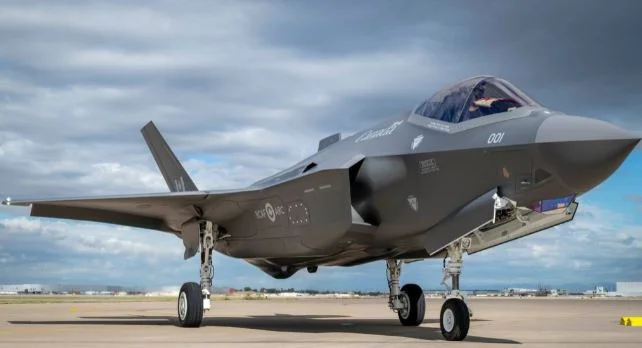
The announcement included a photograph taken in the Phoenix area of Arizona, showing an F-35 bearing Canada’s national insignia, including the distinctive red maple leaf.
The F-35 is an advanced multirole fighter aircraft equipped with stealth technology, sophisticated sensors and integrated electronic systems. Its low-observable design is intended to make the aircraft more difficult for enemy radar systems to detect, potentially providing an advantage in modern aerial combat.
The arrival of the first two aircraft represents an initial step in the programme. However, questions remain about the overall size of Canada’s future F-35 fleet and the government’s final procurement strategy.
When Will Canadian Pilots Begin Training?
The Royal Canadian Air Force was not immediately able to confirm when Canadian pilots would begin training on the newly received F-35 aircraft, according to the supplied report.
The timing of pilot training will be an important consideration as Canada prepares to introduce the next-generation fighters into its military aviation operations.
Meanwhile, US Ambassador to Canada Pete Hoekstra has described the F-35 as the best fighter aircraft in the world.
Despite such endorsements, the Canadian government continues to assess the purchase and the country’s longer-term dependence on the American-made aircraft.
The decision involves more than the initial acquisition of the jets. Canada must also consider training, maintenance, spare parts, software support and the infrastructure required to operate an advanced fighter fleet over the long term.
Carney Government Reviews the Original Plan for 88 Aircraft
Prime Minister Mark Carney’s government has put the previously established plan to purchase 88 F-35s under review.
Officials are considering whether Canada should proceed with an exclusively F-35 fleet or supplement the American aircraft with Gripen fighter jets manufactured by Swedish defence company Saab.
A mixed fleet would mean operating aircraft produced by two different manufacturers, potentially offering an alternative approach to meeting Canada’s military requirements.
However, maintaining two different fighter platforms could also create additional considerations involving training, maintenance, spare parts, logistics and long-term operating costs.
The government must therefore weigh the potential benefits of diversifying its fleet against the operational complexity and financial implications of operating aircraft with different technical systems.
No final decision on the total number of F-35s Canada will purchase has been announced in the supplied report.
Review Comes Amid Trade Tensions With Washington
Canada’s reassessment of the F-35 procurement programme comes amid strained relations with the United States over trade and political rhetoric.
US President Donald Trump has repeatedly threatened trade measures against Canada and made statements about the possibility of bringing the country under American control.
These developments have contributed to tensions between the two neighbouring countries, prompting broader questions about Canada’s economic and strategic relationship with Washington.
Against this backdrop, the Canadian government is examining how best to meet its national security requirements while managing its dependence on military equipment and technology supplied by another country.
The review does not necessarily mean Canada will abandon the F-35 programme. Rather, it reflects an ongoing assessment of the country’s defence priorities and the implications of committing to a major long-term procurement agreement.
According to the supplied report, the review was expected to have been completed approximately a year earlier but remains ongoing.
The central question is whether Canada should continue with the original plan to acquire 88 aircraft or consider a different combination of fighter jets.
Concerns Over US Control of F-35 Software
The debate over Canada’s future fighter fleet extends beyond aircraft prices and combat performance. Control over software, technical systems and ongoing support has also emerged as an important consideration.
According to the supplied report, President Trump discussed last year the possibility of providing allied countries with fighter jets featuring restricted capabilities to preserve the United States’ military advantage.
Former Canadian foreign minister Lloyd Axworthy also raised concerns about American control over the software used in F-35 aircraft in a blog post published on Saturday.
Such concerns centre on the potential consequences of relying on a foreign government and supplier for software, technical assistance and system updates.
For Canada, dependence on external support could become a strategic consideration if access to essential technology or maintenance services were ever restricted or disrupted.
Modern fighter aircraft require continuous technical support throughout their service lives. Beyond the aircraft themselves, operators depend on software updates, replacement components, maintenance systems, pilot training and specialist technical expertise.
The ability to maintain operational readiness over many years is therefore an important part of any decision about which fighter aircraft to acquire.
However, the specific extent of US control over Canadian F-35 operations and the conditions governing software access would need to be established through official programme documentation.
Gripen Alternative Could Reshape Canada’s Defence Strategy
The possibility of purchasing Saab’s Gripen fighters alongside the F-35 has added another dimension to Canada’s procurement review.
The F-35 offers advanced stealth capabilities and an integrated suite of sensors and combat systems. The Gripen represents an alternative platform that the Canadian government is considering as part of its broader assessment.
Choosing between the aircraft, or opting for a mixed fleet, would require the government to examine operational requirements, acquisition costs, long-term maintenance expenses, training needs and the availability of technical support.
A mixed fleet could diversify the sources of Canada’s military aircraft, but it could also introduce additional logistical and operational demands.
The final decision will therefore involve balancing military effectiveness, affordability, operational sustainability and the government’s wider strategic objectives.
A Major Decision for Canada’s Future Air Force
Canada’s receipt of its first two F-35 fighter jets marks progress in the country’s military modernization programme, but it does not settle the question of how large the eventual fleet will be.
The Carney government must still determine whether to continue with the original plan for 88 F-35 aircraft, introduce Gripen fighters as an alternative or pursue a mixed fleet.
The F-35’s stealth technology and advanced combat capabilities remain important considerations, while questions about software dependence, long-term technical support and relations with the United States are also part of the debate.
Ultimately, Canada’s decision will shape not only the composition of its future air force but also the financial and technological commitments required to maintain it.
For now, the arrival of the first two aircraft marks an initial milestone, while the government’s wider review continues to determine the future direction of Canada’s fighter procurement programme.