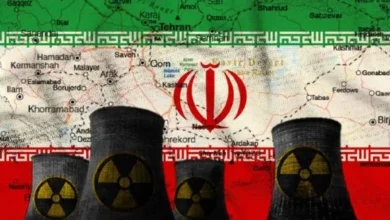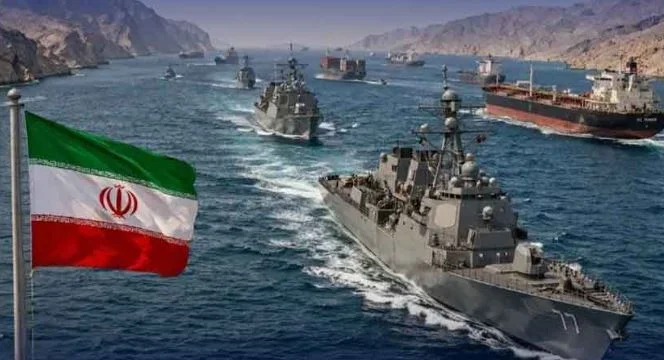
Iran has issued a firm warning to the United States over the reopening of the strategically important Strait of Hormuz, declaring that the vital international shipping route will remain closed until Washington accepts Tehran’s conditions.
Brigadier General Mohammad Akram Nia, spokesperson for the Iranian armed forces, has claimed that Iran’s military maintains full control over the Strait of Hormuz. He said reopening the waterway would depend on the United States agreeing to Iran’s demands.
According to Iranian media reports, Akram Nia made the remarks during a ceremony held on Friday evening in Pishva, in Tehran Province. He emphasized that Iran’s position on the strategic waterway remained unchanged and that its reopening would depend on Washington’s response to Tehran’s conditions.
The ceremony was organized in memory of commanders and pilots killed during the June 5, 1963 movement. The military spokesperson also discussed Iran’s defence capabilities and military preparedness following its direct confrontation with the United States and Israel.
Iranian Forces More Prepared Following Confrontation With US and Israel
Akram Nia claimed that Iran’s regular armed forces, the Islamic Revolutionary Guard Corps (IRGC) and law enforcement agencies are now better prepared and more capable than before following the military confrontation with the United States and Israel.
He said public support during the conflict had strengthened the morale of Iranian military personnel and increased their determination to defend the country.
According to the spokesperson, national unity and public backing have played an important role in strengthening Iran’s defence institutions.
He also stressed that the country’s armed forces remain ready to protect critical defence and strategic locations, describing control of the Strait of Hormuz as an important element of Iran’s national defence strategy.
Around 20 Per Cent of Global Oil Supply Passes Through the Strait
Highlighting the international importance of the Strait of Hormuz, the Iranian military spokesperson said that before the conflict, approximately 130 vessels passed through the waterway every day.
These vessels carried around 20 per cent of the world’s oil supplies, while significant quantities of aviation fuel and chemical fertilizers also moved through the route to international markets.
The Strait of Hormuz connects the Persian Gulf with the Gulf of Oman and the Arabian Sea, making it one of the world’s most important maritime energy corridors.
Large volumes of oil exported by Saudi Arabia, Iraq, Kuwait, the United Arab Emirates and other Gulf countries pass through this strategic waterway.
Any prolonged disruption could affect global oil supplies, energy prices, maritime trade, aviation fuel availability and international fertilizer distribution.
Control of Strait of Hormuz Creates Major Diplomatic and Economic Challenge for Washington
The latest statement from Iran’s military spokesperson comes amid reports of diplomatic efforts to reduce tensions between Tehran and Washington.
By linking the reopening of the Strait of Hormuz to acceptance of its conditions, Iran appears to be treating control of the strategic waterway as an important bargaining issue in its dealings with the United States.
The situation has attracted international attention because any prolonged disruption to shipping through the strait could have serious consequences for global energy markets, oil prices and international trade.
For Washington, the situation presents both a diplomatic and economic challenge, particularly given the waterway’s importance to international energy supplies.
However, claims by the Iranian military regarding complete control of the Strait of Hormuz and its closure have not been independently verified and should be distinguished from independently confirmed developments.
The future of the strategic shipping route will therefore depend heavily on diplomatic developments and the positions taken by both Tehran and Washington.