Muhammad Amanullah
Date: October 12, 2026
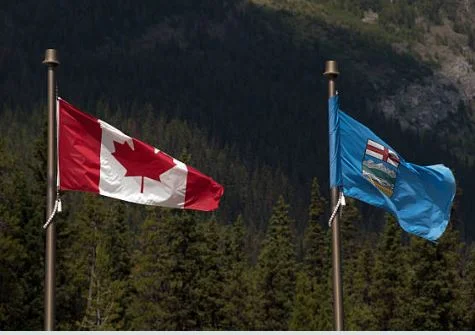
The True Post (Web News) —Alberta’s long-running debate over separation from Canada has returned to the political spotlight ahead of a provincial referendum scheduled for October 19, 2026. Voters will be asked whether Alberta should remain a province of Canada or whether the provincial government should begin the constitutional process required to hold a binding referendum on separation. The ballot question does not itself make Alberta independent or directly decide whether the province will leave Canada. Sources: Elections Alberta and the official referendum information website.
The debate has roots stretching back decades, particularly to disputes over federal energy policies, provincial control of natural resources and Alberta’s relationship with Ottawa. Over the years, demands for greater provincial autonomy and support for independence have emerged at different points in the province’s political history.
Today, the issue has again become a major topic of discussion, with Alberta’s government, separatist groups and supporters of remaining in Canada presenting different views on the province’s future.
1980: The Roots of the Dispute
One of the major sources of tension between Alberta and the federal government was the National Energy Program, introduced in 1980.
The program aimed to strengthen Canada’s energy security and increase federal participation in the country’s oil and gas revenues. Its policies, including measures affecting domestic oil prices, were widely opposed in Alberta, where many considered them federal interference in the province’s natural resources and economic interests.
Although the dispute eventually eased, dissatisfaction over federal authority, resource management and the distribution of economic benefits continued to influence Alberta’s political debate.
1982: A Brief Electoral Breakthrough for Separatists
In 1982, Alberta’s separatist movement achieved a short-lived electoral breakthrough when Gordon Kesler, a candidate for the Western Canada Concept party, won a provincial by-election in central Alberta.
The party campaigned on separating Western Canada from the rest of the country, making independence a central part of its political platform.
However, Kesler failed to retain his seat in the provincial general election later that year. The Western Canada Concept received approximately 12 per cent of the vote but did not win any seats.
The result demonstrated that separatist ideas could attract a degree of public support, although turning that support into a broader electoral mandate remained a significant challenge.
2019: Growing Frustration with Ottawa
In 2019, Jason Kenney’s United Conservative Party formed the provincial government. Its political campaign drew heavily on dissatisfaction with federal policies, particularly those affecting Alberta’s oil and gas industry.
Federal regulations and other measures were criticised by many in the province as obstacles to economic development, investment and the energy sector’s ability to generate wealth.
Kenney called for greater provincial autonomy and pushed back against federal policies he believed disadvantaged Alberta. However, he supported the province remaining part of Canada rather than becoming an independent country.
Danielle Smith’s Leadership and the Autonomy Debate
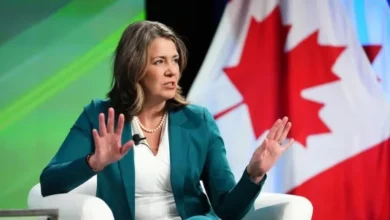
Danielle Smith succeeded Kenney as United Conservative Party leader in 2022. Under her leadership, the party won the 2023 provincial election.
Smith placed renewed emphasis on expanding Alberta’s authority and strengthening provincial autonomy in its dealings with the federal government.
She has described her preferred outcome as a more autonomous Alberta within a united Canada. At the same time, she has argued that the concerns of people who support separation should be heard rather than dismissed.
Her approach has helped bring the question of Alberta’s constitutional future further into mainstream political discussion, even as the government maintains that its preferred outcome is for Alberta to remain in Canada.
2025: A Campaign to Keep Alberta in Canada
On April 28, 2025, Mark Carney’s Liberal Party defeated the Conservatives in the federal election and formed a minority government.
A few days later, on May 5, Smith announced the creation of a panel to examine Alberta’s future within Canada. She said her government would not independently initiate a separation referendum, but would respect a public demand for such a vote if the required legal conditions were met.
In June 2025, former Alberta deputy premier Thomas Lukaszuk launched a petition campaign called Forever Canadian, supporting Alberta’s continued place in Canada. The campaign collected more than 400,000 signatures, exceeding the number required for the petition to be considered.
However, the matter remained before a provincial legislative committee into the spring of 2026. Smith questioned whether the signatures were intended to trigger a referendum or to prompt a vote among members of the legislature.
The competing campaigns reflected the growing division within Alberta over whether the province’s future should be defined by greater autonomy within Canada or by a possible move towards independence.
2026: A Petition Campaign for Separation
In January 2026, Mitch Sylvestre of the Alberta Prosperity Project received permission to launch a petition seeking support for a separation referendum. The campaign was later declared successful after collecting approximately 223,000 signatures.
On February 19, 2026, Smith announced that nine questions concerning immigration and constitutional issues would be included in the October 19 referendum.
The separation issue subsequently encountered a legal obstacle. On May 13, the Alberta Court of King’s Bench rejected a legal application connected to the separatist campaign, finding that the constitutional requirements for appropriate consultation with First Nations had not been met.
Smith announced that her government would challenge the ruling, adding another legal dimension to the debate over Alberta’s future.
A Tenth Question Added to the Referendum
On May 21, 2026, Smith announced a tenth referendum question addressing Alberta’s future within Canada.
The question asks voters to choose between Alberta remaining a Canadian province and the provincial government commencing the constitutional process required to hold a binding provincial referendum on whether Alberta should separate from Canada.
The wording is important: the October 19 vote is not itself a final decision to leave Canada. Instead, it asks voters whether the government should begin the legal process that could lead to a separate, binding referendum on independence.
Smith argued that the legal dispute had raised concerns about whether citizens would be able to express their views through the petition process. She also pointed to the campaign supporting Alberta’s continued place in Canada as evidence of public interest in the issue.
Government Campaign and Political Developments
On September 10, 2026, the Alberta government launched a $4-million public information campaign ahead of the referendum, urging residents to vote in favour of remaining in Canada. Public opinion surveys reported around that period showed majority support for staying in Canada, although polling results depend on the survey’s timing and methodology.
On September 14, Smith’s party lost the Calgary-Shaw by-election to the opposition New Democratic Party. Some political commentators cited the separation debate as one possible factor in the result. Smith’s office, meanwhile, said the division of right-wing votes had contributed to the party’s defeat.
The by-election added to scrutiny of how the referendum issue might affect Alberta’s political landscape.
Report Estimates Separation Could Cost Up to $170 Billion
On September 16, the Alberta government released a report prepared by the University of Calgary’s School of Public Policy examining the potential economic and fiscal consequences of separation.
The report estimated that establishing an independent country could cost between $50 billion and $170 billion during the first five years, depending on how negotiations with Canada unfolded. The estimate includes the costs of establishing government functions and infrastructure, managing the transition and addressing Alberta’s share of federal obligations.
The analysis considered two possible scenarios: a relatively smooth transition involving favourable negotiations with Canada, and a more difficult process involving prolonged negotiations and less favourable outcomes.
The report warned of substantial short-term economic disruption. Under its more difficult scenario, Alberta could also face lasting challenges involving trade, employment, economic growth and public finances. The report’s findings are estimates based on hypothetical scenarios, not a prediction that separation will occur or that a particular cost is certain.
The government commissioned the study to provide information about the possible financial consequences of independence before voters cast their ballots.
October 19: A Significant Moment in Alberta’s Political Debate
The October 19 referendum represents a significant stage in Alberta’s long-running debate over provincial autonomy and separation from Canada.
The result will indicate whether voters want Alberta to remain a Canadian province or want the provincial government to begin the constitutional process required for a binding referendum on independence. It will not, by itself, make Alberta an independent country.
The issue involves more than political identity. It raises questions about control over natural resources, relations with the federal government, constitutional obligations, economic risks and the province’s future financial arrangements.
With supporters of separation and advocates of remaining in Canada continuing to make their cases, Alberta’s constitutional future remains a subject of intense public debate. The October vote will provide an important indication of how voters want the government to proceed, while the legal and economic implications of any future separation process would require further consideration.
Sources for key referendum and economic details: Elections Alberta; Government of Alberta; University of Calgary School of Public Policy; Global News reporting on the September 16, 2026, separation-cost report.