Muhammad Amanullah — September 4, 2026
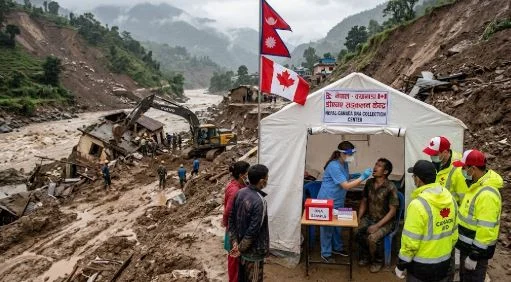
The Canadian government has stepped up efforts to locate and identify Canadian citizens reported missing after severe flooding and landslides in Nepal, with authorities contacting their families to collect DNA samples that could assist in identifying victims or human remains if necessary.
Global Affairs Canada has begun communicating with the families of missing Canadians as authorities work with local agencies following the natural disaster.
Officials say identifying people after a major disaster can be a complex process, particularly when access to affected areas is limited. Modern forensic techniques and DNA data can play an important role in helping authorities establish the identities of missing people.
Severe Flooding Causes Widespread Destruction
Heavy rainfall triggered flooding and landslides in several parts of Nepal, causing widespread damage to roads, bridges and other infrastructure.
In some areas, landslides completely disrupted transportation and cut off access to communities.
Following the disaster, contact was lost with a number of people, prompting search and rescue operations. Rescue teams have faced difficult conditions, including continuing bad weather, mountainous terrain and further landslide risks.
Search for Missing Canadians Continues
Canadian officials are working with local authorities and relevant agencies to gather information about the missing citizens.
Global Affairs Canada is also working to keep affected families informed about developments and provide the necessary consular assistance.
During the search, authorities are collecting information from possible locations and affected areas. However, the complex conditions following a natural disaster can make it difficult to immediately determine a person’s location or identity.
Why Are DNA Samples Important?
Identifying victims following a natural disaster can sometimes be difficult, particularly when people remain unaccounted for over an extended period or when conventional identification methods are insufficient.
In such circumstances, DNA samples provided by family members can play an important role in the identification process.
Forensic experts can compare genetic samples from close relatives with DNA obtained from unidentified individuals or human remains that may be recovered during search and recovery operations.
DNA analysis is widely used internationally to identify victims following natural disasters, major accidents and other emergencies.
Families Face a Difficult Wait
Families of the missing Canadians are facing considerable uncertainty as they wait for information about their loved ones.
While rescue and search teams continue operations in affected areas, families remain hopeful of receiving information about the whereabouts and safety of those missing.
Authorities have asked families to provide available information about missing individuals to the relevant agencies to help facilitate search and identification efforts.
Consular Assistance Being Provided
The Canadian government has said that consular assistance is being provided to affected citizens and their families.
When Canadian citizens are affected by natural disasters abroad, Canadian officials work with local governments, diplomatic missions and international organisations to assist them.
Such assistance can include gathering information about missing people, maintaining communication with families and coordinating with local authorities.
Rescue Operations Face Major Challenges
Nepal’s mountainous geography can make rescue operations particularly difficult following floods and landslides.
Heavy rainfall can close roads and damage bridges, limiting access to remote areas for rescue teams.
In some affected locations, emergency workers may have to reach communities on foot or by air. Poor weather conditions can also disrupt helicopter operations and other aerial rescue efforts.
Identification Process May Take Time
Authorities have indicated that identification through DNA analysis can take time.
The process requires the careful collection and analysis of samples and, where possible, comparison with available forensic evidence.
Canadian officials and their counterparts are working to obtain accurate information about the missing citizens and keep their families informed of any developments.
Families Await Further Information
The search for Canadian citizens reported missing following the natural disaster in Nepal remains underway, while their families continue to wait for news about their loved ones.
The collection of DNA samples indicates that authorities are preparing to use available scientific and forensic methods to assist with identification if required.
Alongside search and rescue operations, the Canadian government is also focused on providing affected families with information and necessary consular support during the difficult situation.