The True Post (Web News) | MUHAMMAD AMANULLAH | October 31, 2026
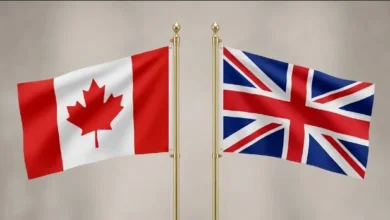
Canada is working towards becoming the European Union’s first-ever associate member, with Prime Minister Mark Carney setting a target of completing negotiations by June. The announcement marks a significant step towards strengthening Canada’s political, economic and strategic relationship with Europe.
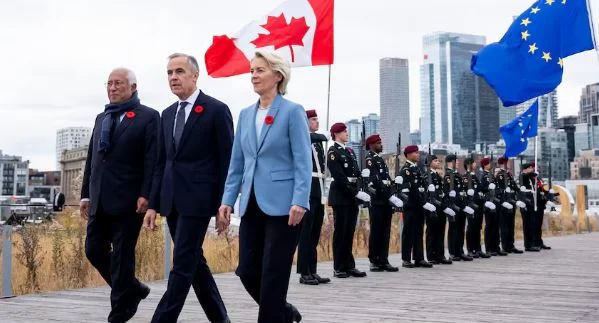
Carney made the announcement following a meeting with European Union leaders in Montreal, describing the proposed arrangement as one of the closest possible partnerships between Canada and the EU without granting Canada full membership.
The Canadian prime minister acknowledged that geographical considerations prevent Canada from becoming a full EU member. However, both sides are exploring a new form of association that could give Canada unprecedented access to closer cooperation with the 27-member bloc.
He said discussions over the proposed membership’s structure, scope and responsibilities would continue over the coming months, with negotiations targeted for completion by June, when he plans to attend meetings of the European Council in Europe.
Carney also announced plans for a joint meeting in March involving the European Commission President Ursula von der Leyen, European Council President António Costa, European commissioners and members of Canada’s federal cabinet.
Disagreements Among EU Members Over Associate Membership
The proposal to make Canada the European Union’s first associate member was initially introduced by European Commission President Ursula von der Leyen last month. However, the idea has faced reservations from some EU member states, particularly Germany.
The European Union’s existing legal and administrative framework does not include a formal system for associate membership. Consequently, it remains unclear what legal changes and legislative measures would be required to establish such an arrangement.
Disagreements also emerged during preparations for a joint declaration. According to informed sources, the initial draft included the term “associate membership,” but it was later removed following objections from certain countries. Germany reportedly considered the terminology unacceptable.
The final declaration instead referred to establishing closer relations between Canada and the European Union without granting Canada full membership.
Financial Costs and Legal Requirements Remain Unclear
The financial implications of the proposed partnership have yet to be determined. Neither side has provided details about the overall cost or the financial commitments Canada might be expected to undertake.
Responding to questions about potential expenses, Carney said Canada viewed the initiative as an opportunity to move forward together and strengthen relations rather than simply paying for membership.
European Council President António Costa, meanwhile, described Canada as the non-European country closest to European values and identity.
Nevertheless, the proposal remains subject to further negotiations. Approval from EU member states, as well as parliamentary debate and a vote in Canada’s Parliament, will also be required.
Major Agreements Between Canada and the European Union
Despite disagreements over associate membership, Canada and the European Union have made progress on several important agreements aimed at strengthening their relationship.
One significant development involves an agreement with the European Investment Bank to encourage investment in Canada’s strategic natural resources, particularly critical minerals.
The two sides have also advanced agreements concerning measures against anti-competitive trade practices, digital commerce and the facilitation of cross-border data transfers.
Another important initiative will provide Canadian researchers and businesses with access to European supercomputers, potentially expanding cooperation in advanced technology and scientific research.
Canada will also participate in the European Union’s Ukraine Support Loan programme to assist Ukraine.
Cooperation in Education, Research, the Arctic and Artificial Intelligence
The proposed partnership is expected to expand opportunities for citizens of Canada and European countries to study, work and conduct research across each other’s territories.
Canada and the EU will also begin discussions on laying new undersea communication cables to improve connectivity between Canada, Europe and Asia.
Their joint declaration further outlines plans to strengthen cooperation in the Arctic region, counter foreign information interference, promote the safe use of artificial intelligence and address related security challenges.
Both sides have also agreed to work towards reforming the World Trade Organization (WTO) rather than dismantling it. Additional areas of cooperation include improving border security and addressing climate change through joint initiatives.
According to Prime Minister Mark Carney, the broader objective of the partnership is to strengthen national sovereignty, improve resilience and enable both sides to respond collectively to global crises.
However, the overall financial cost of these initiatives remains uncertain. Canada’s Finance Minister François-Philippe Champagne also avoided providing a direct estimate of the expenses, describing the partnership instead as a source of new opportunities for Canadians.
The proposed associate membership could represent a historic development in Canada-EU relations, although its final structure, financial commitments and legal framework will depend on the outcome of negotiations and approval from the relevant authorities.