Muhammad Amanullah — September 17, 2026
The European Union has proposed creating a new form of partnership that could make Canada the bloc’s first associate member, as Europe seeks to deepen cooperation with Ottawa on defence, trade, technology, energy and critical minerals.
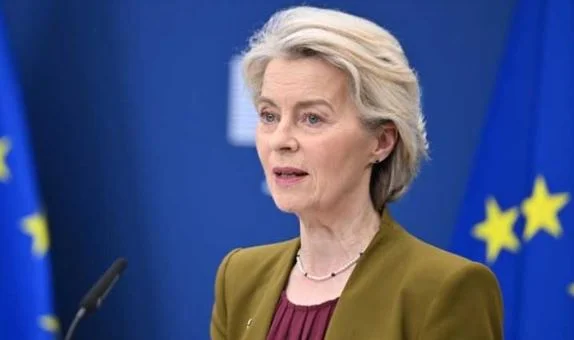
European Commission President Ursula von der Leyen made the proposal during her State of the Union address to the European Parliament in Strasbourg on Wednesday, saying she wanted to work with Canada to open the door to an associate membership arrangement.
The proposal comes amid major changes in global trade and security relations, including growing tensions between Canada and the United States. (European Commission Cyprus)
New Offer for Canada
Von der Leyen said the EU wanted to take its relationship with Canada to the highest possible level.
She proposed moving beyond the existing Canada-EU trade relationship toward what she described as an “alliance for the future”, with cooperation covering intelligent manufacturing, technology, defence industries, the Arctic, energy, critical minerals, batteries, artificial intelligence, quantum technology, cybersecurity and economic security.
The European Commission described Canada as a partner that shares important values with the EU, including democracy and cooperation on major international issues. (European Commission Cyprus)
The proposed associate membership would be different from full EU membership. The precise rights, responsibilities and institutional arrangements of such a status have yet to be defined.
Canada Welcomes the Proposal
Canadian Prime Minister Mark Carney welcomed the European proposal and called for a stronger strategic relationship between Canada and the EU.
Speaking to the European Parliament in Strasbourg on Thursday, Carney said Canada and Europe could strengthen cooperation in areas including critical minerals, artificial intelligence, defence, trade and energy security.
He also argued that closer relations should strengthen Canada’s ability to act independently while maintaining its relationship with the United States. (Reuters)
Carney has previously said Canada is not seeking to become a member of the European Union and has instead discussed the possibility of a new and deeper partnership.
Growing Tensions With the United States
The EU proposal comes at a time when Canada’s economic relationship with the United States is facing significant pressure.
The United States remains Canada’s most important trading partner, with extensive cross-border trade in energy, manufactured goods, agricultural products and other sectors.
However, disagreements over tariffs and trade policy have increased uncertainty for businesses and investors.
Against this backdrop, Canada has been seeking to strengthen relationships with other major economies and diversify its economic and strategic partnerships.
The European Commission’s proposal therefore comes as Ottawa and Brussels are discussing ways to expand their existing relationship. (Reuters)
Trump Criticises the Proposal
US President Donald Trump has criticised the idea of closer Canada-EU ties and warned of possible trade consequences if the relationship develops in a way Washington considers hostile.
Trump described the proposal negatively, while the European Commission has stressed that closer cooperation with Canada is intended to strengthen mutual interests rather than create an alliance directed against the United States. (Reuters)
Carney, meanwhile, has said Canada will make its own decisions about international partnerships and that no outside country will determine whom Canada chooses to work with. (Reuters)
Focus on Defence and Security
Security cooperation is one of the most important elements of the proposed relationship.
Von der Leyen has called for closer cooperation between the EU and partners including Canada, particularly as European countries face growing security challenges.
She has also proposed a European Security Council involving EU countries and selected non-EU partners such as Canada, Norway, the United Kingdom and Ukraine.
Canada has already been strengthening defence cooperation with European countries. On Wednesday, Ottawa formally applied to join the UK-led Joint Expeditionary Force, a military coalition involving several European NATO countries. (Reuters)
Trade, Energy and Critical Minerals
Economic cooperation would also be central to any future Canada-EU arrangement.
Canada and the EU already have the Comprehensive Economic and Trade Agreement, known as CETA. The European Commission says trade in goods between the two sides has grown significantly since the agreement came into effect.
Von der Leyen proposed expanding cooperation into critical minerals, batteries, energy, technology and advanced manufacturing.
Canada’s natural resources and energy capacity could also become important components of deeper European cooperation, particularly as European countries seek secure supplies of critical materials and energy. (European Commission Cyprus)
Full EU Membership Is Different
Associate membership should not be confused with full membership of the European Union.
Full EU membership is governed by the bloc’s treaties and accession process, which is designed for European states that meet a range of political, legal and economic requirements.
Canada, located in North America, is not seeking full EU membership. The current proposal instead involves creating a new form of institutional relationship that would allow much deeper cooperation without making Canada a full member of the bloc.
The exact structure of this proposed associate membership has not yet been established.
A New Model for EU Partnerships
The proposal could eventually create a new model for how the European Union works with major non-European partners.
The European Commission said the arrangement could allow Canada and the EU to cooperate more closely while maintaining their separate political and institutional identities.
However, significant questions remain about how associate membership would operate, including Canada’s access to EU programmes, participation in decision-making, trade arrangements, defence cooperation and other institutional matters.
For now, the proposal marks a significant new development in Canada-EU relations. Both sides have expressed interest in taking their partnership to a higher level, but the details of any future associate membership will need to be negotiated.
As Canada continues to navigate changing relations with the United States, the EU proposal has opened a new discussion about the country’s economic, security and diplomatic relationships with Europe. (Reuters)