Muhammad Amanullah | The True Post
Date: October 29, 2026
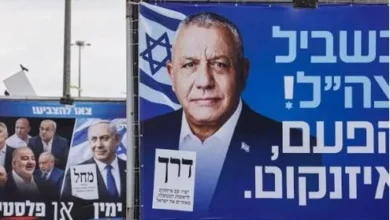
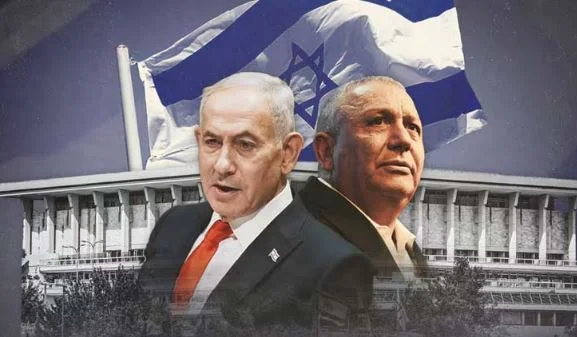
Israel’s latest election projections have left Prime Minister Benjamin Netanyahu facing a difficult path to forming a government, with neither the governing bloc nor the opposition appearing to have secured a majority in the 120-seat Knesset.
Preliminary results indicate that Netanyahu’s Likud party is projected to win 26 seats. Parties aligned with Netanyahu are expected to secure a combined 53 seats, while the opposition bloc led by Gadi Eisenkot is projected to win 48 seats. Arab-led parties are expected to hold 19 seats.
A government requires the support of at least 61 members of the Knesset. Based on these projections, neither major bloc has enough seats to form a government independently.
Coalition Talks Could Determine Israel’s Next Government
The election results are likely to trigger difficult coalition negotiations as political parties consider their options for securing a parliamentary majority.
Eisenkot’s opposition bloc may need support from Arab-led parties to reach the required number of seats. However, differences among opposition parties over whether and how to cooperate with Arab political groups could complicate negotiations.
Netanyahu also faces the challenge of persuading additional parties to join his coalition. Without sufficient support, his political future and the formation of Israel’s next government could remain uncertain.
Concerns Over Netanyahu’s Political Strategy
Netanyahu’s political opponents have raised concerns that military action against Iran could become part of his efforts to maintain political support. These remain allegations and political concerns, rather than established facts.
The election projections have intensified questions about whether Netanyahu can retain power or whether opposition parties will manage to build an alternative coalition.
President to Oversee Government Formation
Once the official election results are confirmed, Israeli President Isaac Herzog will oversee the process of selecting a candidate to form the next government.
Under the process described in the election report, the designated candidate will have 28 days to form a coalition, with a possible extension of 14 days.
If coalition negotiations fail, Netanyahu could remain in a caretaker role while political parties continue talks. If no viable government can be formed, Israel could face another election.
Israel Faces an Uncertain Political Future
The projected results point to a period of political uncertainty in Israel. Both Netanyahu’s allies and the opposition will need to negotiate with other parties to secure the parliamentary support required to govern.
The final outcome will depend on the official seat count and the ability of political leaders to reach agreements. Until coalition negotiations produce a clear majority, the country’s next government remains uncertain.