Muhammad Aman Ullah
Published: September 2, 2026
The True Post (News)
The Ontario government has announced plans to remove or redesign bike lanes on some of Toronto’s busiest roads, with vehicle lanes set to return in areas where road space was previously allocated to cyclists.
The provincial government said Tuesday that changes will be made along several major Toronto routes, including Bloor Street, Yonge Street, University Avenue, Queen’s Park, Queen’s Park Crescent and Avenue Road.
Under the plan, sections of these roads where vehicle lanes were previously removed to create bike lanes could be converted back for motor-vehicle traffic.
Vehicle Lanes to Be Restored
The Ontario government is seeking proposals to review sections of the affected roads and develop possible design options.
The proposals will examine whether bike lanes can remain in certain locations through redesigns, but the government has indicated that restoring road capacity for vehicles will be a major priority.
Officials have argued that the changes are intended to address traffic congestion and improve vehicle movement along some of Toronto’s busiest corridors.
Bloor Street West to See Immediate Changes
The province said work to remove or redesign bike lanes will begin immediately on Bloor Street West.
A section of approximately 600 metres has been identified for relatively straightforward changes to restore vehicle lanes.
The area includes a section near Clossold Road, where vehicle lanes were already restored in December 2025.
Ontario Court of Appeal Decision
The provincial government’s latest move follows a recent decision by the Ontario Court of Appeal.
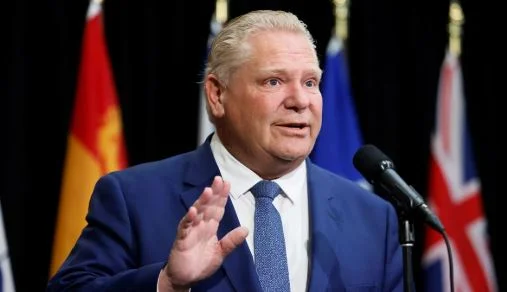
In August, the court ruled that the Doug Ford government could proceed with plans to remove approximately 19 kilometres of protected bike lanes in Toronto.
The decision overturned an earlier lower-court ruling that had found the province’s bike-lane legislation unconstitutional.
The appeal court ruling gave the Ontario government greater authority over the future of bike lanes on major Toronto roads.
Transportation Minister Defends the Plan
Ontario Transportation Minister Prabmeet Sarkaria defended the government’s decision, arguing that bike lanes are contributing to traffic congestion on roads such as Bloor Street West.
Sarkaria said he had spoken with residents and local stakeholders and had heard concerns that bike lanes were affecting businesses in some areas.
He also said some people believe the current road configuration discourages visitors from travelling to parts of downtown Toronto.
According to the minister, restoring vehicle lanes is intended to help address these concerns.
Government Says Traffic Is a Priority
Sarkaria said the province wants to reduce congestion by restoring road space for vehicles.
He acknowledged, however, that the government would consider designs that allow both cyclists and motorists to use the available road space where practical.
The province’s approach will therefore vary depending on the characteristics of individual roads and intersections.
Why the 600-Metre Section Was Chosen
Sarkaria said the 600-metre section of Bloor Street West requires comparatively less work to restore vehicle lanes.
That, he said, is one reason the government decided to begin the process there rather than waiting for broader changes across the city.
The province is expected to assess other major corridors as part of its wider review.
Safety Concerns Raised
The plan has also raised questions about road safety and the future of cycling infrastructure in Toronto.
Sarkaria said traffic laws will continue to apply to both cyclists and motorists regardless of whether dedicated bike lanes are present.
He pointed out that many roads across Ontario are shared by cyclists and vehicles without dedicated cycling infrastructure.
The minister argued that cyclists and motorists can continue to share some Toronto roads as well.
Government Considering Alternative Cycling Routes
The province is also considering whether secondary streets could provide alternative routes for cyclists.
Sarkaria suggested roads such as King Street and College Street could potentially serve as alternative cycling corridors.
Cycling advocates, however, have argued that moving bike routes onto smaller streets would not necessarily provide a practical substitute, particularly for people who need direct access to commercial areas.
They say cyclists need safe and continuous routes that connect residential neighbourhoods with workplaces, businesses and other destinations.
Toronto Residents Raise Concerns
Some Toronto residents have expressed concern about the removal of protected bike lanes.
One resident, Mike Field, said he uses the bike lanes almost every day and relies on cycling for transportation.
He said that even if the Bloor Street bike lane is removed, he would still need to travel along the street for his daily activities.
Field said he does not own a car and cannot afford to purchase one, making cycling an important transportation option for him.
Concerns About Cycling Without Dedicated Lanes
Field said he had previously cycled along Queen Street toward downtown, where there was no dedicated bike lane.
He described the experience as dangerous and difficult.
He argued that cyclists need reliable access to commercial areas and that simply moving bike infrastructure onto very small streets would not necessarily solve the problem.
Mayor Olivia Chow Criticizes Province
Toronto Mayor Olivia Chow has also criticized the provincial government’s decision.
Chow said the Ontario government should focus on other important issues rather than creating political disputes over Toronto’s transportation system.
She pointed to ongoing Canada-U.S. trade tensions and other challenges facing families and workers as areas where she believes the province should focus its attention.
Chow Calls for Safety for All Road Users
The Toronto mayor said she does not accept arguments that pit different road users against each other.
According to Chow, pedestrians, cyclists and motorists all have a right to travel safely.
She argued that transportation policy and street design should focus on protecting everyone who uses Toronto’s roads rather than treating one group as more important than another.
Bike Lanes Become Mayoral Election Issue
The future of Toronto’s bike lanes has also become an important issue in the city’s upcoming municipal election.
Mayoral candidate Brad Bradford has already said that, if elected mayor, he would remove the Bloor Street West bike lanes.
Bradford previously served as one of the city councillors who voted in favour of establishing the bike lanes, making his current position a notable change.
Another Mayoral Candidate Criticizes the Province
Mayoral candidate Chris Alexander described the provincial intervention as evidence of administrative failure at City Hall.
He argued that an effective municipal government should work with the province to develop transportation solutions that have public support.
Alexander said Toronto should aim to make decisions correctly the first time instead of becoming involved in expensive legal disputes that can continue for years.
Green Party Opposes Bike Lane Removals
Ontario Green Party Leader Mike Schreiner also criticized the provincial announcement.
Schreiner described the move as political theatre and argued that removing bike lanes would not address the fundamental causes of traffic congestion.
He called for greater investment in cycling infrastructure and public transit instead.
Questions Over Government Research
The provincial government’s position has also been questioned by some research and documents that emerged during previous legal proceedings.
Internal Ontario Ministry of Transportation documents released during a court case involving Bill 212 raised concerns about the potential consequences of removing bike lanes.
Bill 212 gave the provincial government broader powers over municipal bike-lane projects.
One report cited by critics included analysis suggesting that removing bike lanes could potentially increase collisions involving road users.
The findings have been cited by opponents of the government’s policy as evidence that removing protected cycling infrastructure could create safety risks.
Disagreement Over Traffic Impact
A 2024 Cabinet Office briefing also raised questions about whether removing bike lanes would produce the traffic improvements sought by the government.
The briefing reportedly noted that available evidence did not clearly establish that removing a bike lane from a road would significantly reduce congestion.
This has created a debate between the provincial government’s argument that restoring vehicle lanes will improve traffic flow and concerns raised by opponents about whether the policy will deliver the expected results.
Toronto’s Transportation Debate Continues
The dispute over Toronto’s bike lanes has now moved beyond a transportation policy debate and become a major political issue.
The Ontario government says restoring vehicle lanes is necessary to tackle congestion and support businesses, while Mayor Olivia Chow, cycling advocates and other critics argue that protected bike lanes are important for safety, accessibility and sustainable transportation.
The issue is also likely to remain prominent during Toronto’s municipal election campaign.
As changes begin on Bloor Street West and the province considers further modifications on major Toronto roads, the debate will increasingly focus on whether restoring vehicle lanes actually improves traffic conditions — and what impact the changes have on cyclists, motorists, pedestrians and local businesses.