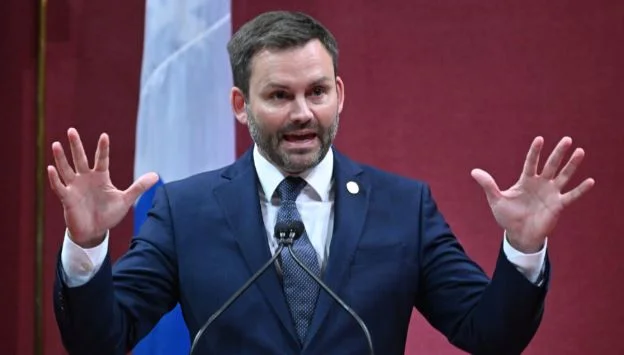
Quebec has a new government after Paul St-Pierre Plamondon was sworn in as the province’s 34th premier on Wednesday afternoon, marking the Parti Québécois’s return to power after more than a decade.
Following the swearing-in ceremony, Plamondon announced a cabinet of 23 ministers, including the premier. The new team is six members smaller than the cabinets formed under the previous Coalition Avenir Québec (CAQ) governments.
Plamondon said the reduced cabinet was intended to create the province’s smallest ministerial team in roughly 20 years.
However, the new cabinet is larger than the 19-member cabinet established by former Liberal premier Jean Charest in 2007, when he led a minority government.
Political analyst Daniel Tran said the smaller cabinet sends a clear message that the Parti Québécois intends to govern with a more streamlined administrative structure.
Some Montreal residents welcomed the move. Elizabeth Gomery said a government did not need to be large to be effective and that a more modest administration could be a positive development.
Another resident, Jeffrey Burnett, said reducing unnecessary administrative positions would be a welcome step.
Minority Government Will Need Opposition Support
The Parti Québécois won 59 seats in the provincial election held on October 5, falling five seats short of the 64 required for a majority in Quebec’s National Assembly.
Addressing the legislature, Plamondon said voters had given his party a mandate to govern as a minority administration. As a result, his government would need to work with opposition parties to pass legislation and secure support for important decisions.
The balance of seats could still change. The Parti Québécois has requested recounts in two constituencies, Vachon and Champlain, where its candidates finished second.
If recounts result in victories for the party in both ridings, the Parti Québécois could increase its seat count to 61. Even then, it would remain three seats short of a majority.
Parti Québécois Members Swear Allegiance to Quebecers
Before the new government was formed, Parti Québécois elected members took their oaths last week, pledging allegiance to the people of Quebec rather than to the King.
Quebec’s National Assembly removed the requirement for legislators to swear allegiance to the monarch in 2022. Plamondon had previously refused to take the oath to the King.
The move reflects the Parti Québécois’s long-standing political position. The party advocates Quebec sovereignty and has consistently supported greater autonomy for the province in determining its political and constitutional future.
Premier to Take Direct Responsibility for Homelessness
As he unveiled his cabinet, Plamondon announced that he would personally oversee the province’s response to homelessness.
The growing number of people experiencing homelessness and the challenges involved in providing adequate housing have become major public concerns in Quebec.
The new premier also stressed the need to provide safe shelters for women experiencing domestic or intimate-partner violence. He said additional shelter spaces were needed to ensure vulnerable women could access protection and support.
Montreal Mayor Soraya Martinez Ferrada described the premier’s decision to take direct responsibility for homelessness as significant.
She said that when an issue is handled at the highest level of government, accountability rests directly with the premier.
Political analyst Daniel Tran also said the decision indicated that the government viewed homelessness not merely as an administrative concern but as a humanitarian crisis.
Tran added that because Plamondon had personally assumed responsibility for the issue, his performance and the advice provided to him would be important factors in assessing the government’s response.
Major Challenges Ahead for Quebec’s New Government
Plamondon’s administration faces several major challenges, including homelessness, housing shortages and the delivery of social services. As a minority government, it must also build consensus with opposition parties to advance its legislative agenda.
The decision to form a smaller cabinet signals an intention to streamline government operations. Whether that approach delivers practical benefits will depend on the administration’s ability to address the province’s pressing needs.
The Parti Québécois’s return to power after more than a decade represents a significant shift in Quebec politics. The government’s performance, its relationships with opposition parties and its handling of public concerns will help determine its political direction in the years ahead.