The True Post (Web News) | MUHAMMAD AMANULLAH | October 20, 2026
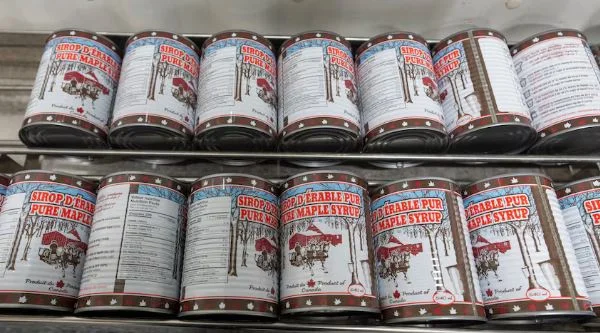
Quebec’s maple syrup industry has run out of its strategic reserve amid rising demand, raising concerns about future supply shortages if weather conditions disrupt production. Industry representatives are calling on the provincial government for financial assistance, increased investment, and support to expand production and reach new international markets.
Luc Goulet, president of Quebec Maple Syrup Producers, said sales have continued to grow, leaving the industry’s strategic reserve depleted. He warned that if weather conditions are unfavorable during the next maple sap collection season, producers could struggle to meet demand.
Maple syrup production depends heavily on weather, temperatures, and the seasonal flow of sap from maple trees. The industry established a reserve to help maintain supplies during periods of lower production and reduce the risk of sudden market shortages and price fluctuations.
According to Goulet, the depletion of the reserve has removed an important safeguard against poor weather and production shortfalls. He pointed to shortages in 2007 and 2008, when a lack of available products forced the industry to lose some markets.
Goulet warned that when consumers cannot find their preferred products, they may switch to alternatives, including other sweeteners. Once purchasing habits change, encouraging customers to return to maple syrup can become difficult.
U.S. Demand and Tariff Concerns Add to Uncertainty
One factor behind the increase in demand has been advance purchasing by American buyers. Last year, several U.S. commercial customers reportedly increased their maple syrup inventories amid concerns that tariff threats made by U.S. President Donald Trump against Canadian products could become reality.
This created an unusual business environment for Canadian producers and exporters. While advance purchases increased demand, uncertainty over potential trade restrictions and tariffs complicated commercial planning.
Louis Turenne, president of the Maple Industry Council, said Quebec’s maple syrup exports have recorded significant growth in recent years.
According to figures he provided, exports increased by 9.34 per cent in 2024 compared with the previous year, followed by a 15.8 per cent increase in 2025.
Growth slowed in 2026. Between January and August, exports rose by 2.48 per cent compared with the same period in 2025. Turenne noted that maintaining the exceptional growth recorded in previous years can be difficult.
The United States currently accounts for approximately 65 per cent of Canadian maple syrup exports. This concentration creates a significant trade risk because changes in U.S. tariffs, trade policies, or consumer demand can directly affect Canadian producers and exporters.
Industry Looks to Europe, Australia and Asia for New Markets
Industry leaders say expanding into new international markets is essential to reducing reliance on the United States.
Turenne said the U.S. share of maple syrup exports has declined from approximately 80 per cent to around 65 per cent over the past two decades, reflecting efforts to diversify export destinations.
However, he believes more work is needed to expand sales in Europe, Australia, and Asia. Developing new markets could increase exports and provide alternative buyers if trade disruptions or weaker demand affect the U.S. market.
Turenne proposed that the Quebec government provide financial assistance to maple syrup producers and help companies involved in manufacturing and packaging find customers abroad.
Government support, he argued, could help businesses expand production capacity, improve access to international markets, and strengthen the industry’s ability to respond to rising global demand.
Maple Syrup Remains an Important Part of Quebec’s Economy
Maple syrup is one of Canada’s best-known products, but production is heavily concentrated in Quebec. According to industry figures cited in the report, Quebec accounts for more than 70 per cent of North American maple syrup production.
When production, processing, and specialized equipment manufacturing are included, the maple syrup sector contributed approximately $1.21 billion to Canada’s gross domestic product in 2025, according to the report.
The industry supports the equivalent of more than 10,000 full-time jobs and generated approximately $285 million in tax revenue. These figures exclude municipal taxes and fees collected through leases on public land.
Quebec’s maple syrup sector also supports seasonal tourism. Traditional springtime destinations attract visitors with maple syrup-based meals and local dishes.
However, industry representatives distinguish these tourism and restaurant activities from industrial production figures, noting that they belong primarily to the hospitality and tourism sectors.
Producers Call for Greater Government Investment
Goulet said there is still considerable potential to increase maple syrup production across Quebec’s maple forests and sugar bushes. However, he believes provincial investment has not kept pace with the industry’s needs.
He expressed hope that the Parti Québécois government formed following the recent election would pay greater attention to the sector’s challenges.
Goulet argued that maple syrup already makes a significant contribution to employment, exports, and local economies and therefore deserves additional government support.
He also highlighted the importance of maple syrup production to smaller municipalities, where the industry can serve as a foundation for local economic activity. If production-related businesses disappear, some rural communities could struggle to sustain their economies.
Industry Faces Three Major Challenges
Quebec’s maple syrup sector is confronting three key priorities: rebuilding its strategic reserve, investing in greater production capacity, and reducing its dependence on the U.S. market.
Without timely action, unfavorable weather conditions could make it increasingly difficult to meet rising global demand and maintain reliable supplies.
At the same time, investment in production and access to new export markets could help the industry strengthen its resilience and expand its contribution to Canada’s economy.
For Quebec producers, the challenge is not simply to sell more maple syrup but to ensure that future supplies remain reliable even when weather conditions, international trade policies, and global demand create uncertainty.