Baasma Wafa | September 15, 2026
The True Post (Web News) A drone attack on Saudi Arabia’s East-West oil pipeline has turned a regional security crisis into a fresh threat for global energy markets.
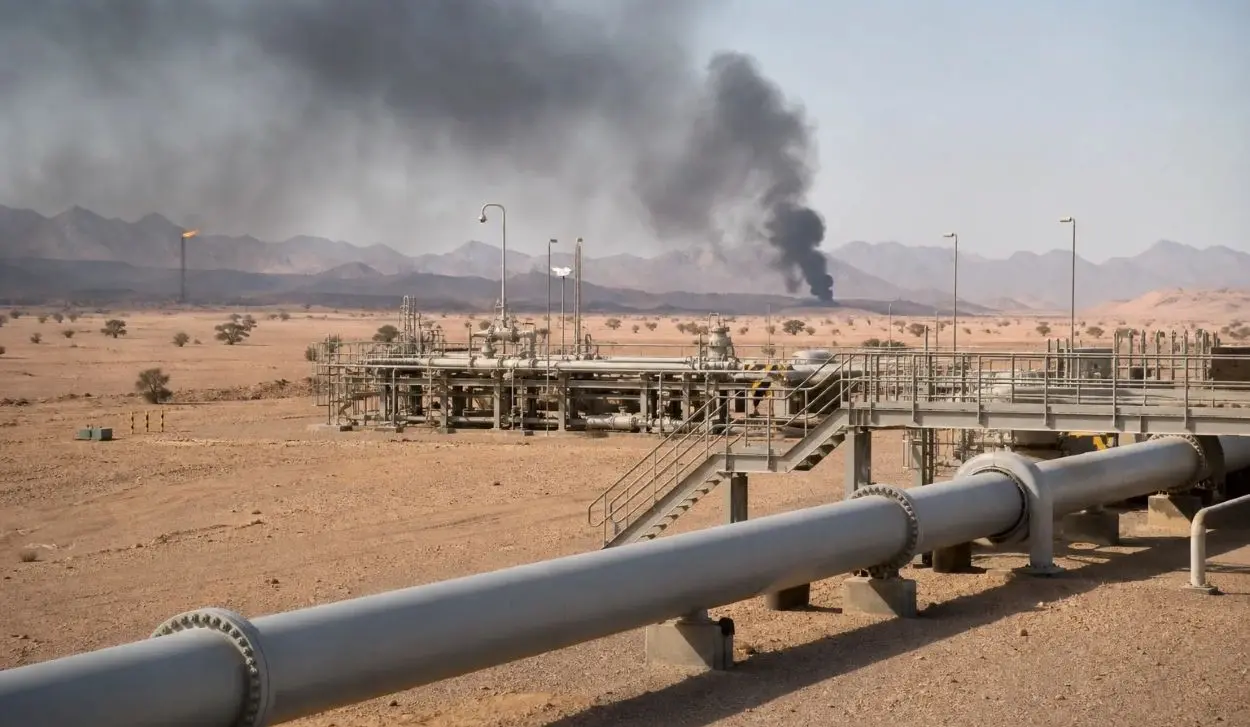
Saudi Arabia temporarily shut the 1,200-kilometre pipeline after drones struck parts of the system in the Riyadh and Madinah regions, causing injuries and damage. Saudi authorities said the drones were launched from Iraq. Riyadh has so far held back from retaliating, giving Baghdad time to investigate and prevent further attacks.
The pipeline is one of Saudi Arabia’s most important alternative routes for moving crude to the Red Sea. It allows the kingdom to send oil toward the western coast without relying entirely on routes through the Strait of Hormuz.
That makes its disruption particularly serious.
Why This Pipeline Matters
Saudi Arabia has some of the world’s largest oil reserves, but having oil underground is only part of the story.
The oil still needs to be transported, processed and shipped to international buyers.
The East-West pipeline connects Saudi oil fields in the east with the Yanbu area on the Red Sea. Under normal circumstances, it can move several million barrels of crude a day and provide Saudi Arabia with an important alternative export route.
With shipping through the Strait of Hormuz already severely disrupted by the wider regional conflict, the pipeline has become even more important.
Its closure therefore removes one of the routes Saudi Arabia can use to keep its oil moving.
Oil Markets React Quickly
The immediate effect has been felt in oil prices.
Brent crude rose above $107 a barrel on Monday, with prices briefly reaching about $108 as traders reacted to the latest disruption.
The increase is not simply about the amount of oil currently missing from the market.
Oil prices also reflect fear.
Traders are asking how long the pipeline will remain closed, whether Saudi Arabia can maintain exports through other routes and whether more energy infrastructure could be targeted.
That uncertainty can push prices higher even before a serious global shortage develops.
Saudi Arabia Was Already Under Pressure
The pipeline attack comes at a difficult time for Saudi Arabia’s oil industry.
The International Energy Agency said Saudi crude supply fell to about 6 million barrels per day in August, its lowest level in more than three decades. The agency attributed the decline to disruptions linked to attacks on oil infrastructure and shipping in the region.
That means the latest pipeline shutdown is not happening in an otherwise stable market.
Saudi oil flows have already been affected by the wider regional conflict.
Another major disruption adds further pressure.
The Yemen Factor
The situation is also becoming more complicated because of developments in Yemen.
Houthi forces have intensified their activities around the Red Sea and have seized strategic positions near the Bab el-Mandeb Strait, another major route for international shipping. Their attacks have also targeted Saudi interests during the current escalation.
But the latest pipeline attack should not automatically be described as a Houthi attack.
Saudi Arabia has specifically said the drones came from Iraq, while Iraqi authorities have launched an investigation and reportedly located equipment believed to have been used to launch the drones.
That distinction matters because the incident could widen an already complicated regional conflict.
Saudi Arabia is now dealing with threats from multiple directions rather than a single battlefield.
A Pipeline Can Be as Important as a Battlefield
The attack also highlights something that is easy to overlook when discussing modern conflicts.
Energy infrastructure can be a strategic target in its own right.
A pipeline does not need to be completely destroyed to cause disruption. Damage to pumping stations, control systems or other critical equipment can force operators to shut down a much larger network while safety checks and repairs take place.
That can create economic consequences far beyond the location of the attack.
The East-West pipeline is particularly significant because it was designed partly to give Saudi Arabia an alternative to the Strait of Hormuz.
Now that alternative is also under pressure.
What It Means for Ordinary Consumers
The global oil market may sound distant from everyday life, but higher crude prices can eventually reach consumers.
More expensive oil can raise the cost of petrol and diesel. It can also increase transportation and shipping costs, affecting businesses that depend on fuel to move people and goods.
For countries that import large quantities of petroleum, prolonged high prices can put additional pressure on inflation and foreign-exchange reserves.
Pakistan is among the countries that could feel such pressure if the disruption becomes prolonged.
The impact will depend on how long the pipeline remains offline and how much Saudi Arabia can continue exporting through other routes.
Saudi Arabia Has Chosen Restraint, For Now
One of the most significant aspects of the latest incident is Riyadh’s response.
Saudi Arabia has condemned the attack but has so far decided not to retaliate, following a request from Iraq’s prime minister. Riyadh said it would give the Iraqi government an opportunity to take measures against attacks launched from its territory while reserving the right to act to protect its security and critical infrastructure.
That decision gives diplomacy some room.
It also prevents the pipeline attack from immediately opening another front between Saudi Arabia and Iraq.
But the restraint may not last indefinitely.
If attacks continue, pressure on Riyadh to respond will increase.
The Bigger Risk Is a Longer Disruption
The most important question now is not simply whether oil prices will rise this week.
It is how long the disruption will last.
Reports suggest the pipeline could remain out of service for weeks depending on the extent of the damage. The affected route normally carries millions of barrels of oil, meaning a prolonged shutdown could remove a significant amount of export capacity from an already strained market.
If repairs are completed quickly, the current price shock could ease.
If the shutdown continues while other regional routes remain under threat, the situation becomes much more serious.
A Warning for the Global Energy System
The latest attack offers a clear reminder that the world’s energy security depends on much more than oil production.
It depends on pipelines, ports, shipping lanes and the political stability needed to protect them.
Saudi Arabia may have some of the world’s largest oil reserves, but those reserves are only useful to the global market if the oil can reach it.
For now, the biggest concern is not that the world has suddenly run out of Saudi oil.
It is that another important route for delivering that oil has been placed at risk.
And in a market already dealing with conflict and disrupted shipping, even a temporary loss of a major pipeline can have consequences far beyond Saudi Arabia.