Muhammad Amanullah
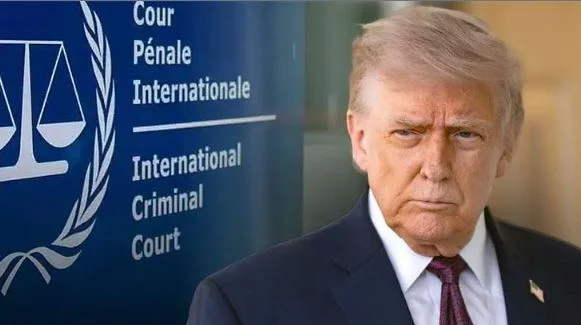
Date: September 21, 2026 The True Post (Web News) —The Trump administration is preparing sweeping sanctions against the International Criminal Court (ICC) that could target the institution itself rather than only individual judges and prosecutors, marking a significant escalation in Washington’s campaign against the Hague-based tribunal.
According to a Wall Street Journal report cited by Reuters and other international media, the proposed measures could prohibit most transactions involving the ICC after a six- to seven-month grace period. Reuters said it could not immediately independently verify the Wall Street Journal report. (Reuters)
The proposed measures could affect the court’s finances, access to services and day-to-day operations. The exact timing of any formal announcement remains uncertain, although the measures could be finalized during the United Nations General Assembly in New York or shortly afterwards. (The News Pakistan)
Entire Court Could Become the Target
The reported plan would represent a broader approach than the sanctions Washington has previously imposed on individual ICC officials.
Under the proposed measures, US citizens and companies could generally be prohibited from providing the ICC with money, goods or services without authorization from the US Treasury.
The restrictions could also make it difficult for the court to conduct transactions in US dollars and could complicate its access to parts of the international financial system. (The News Pakistan)
Communications-related transactions would reportedly be exempt from some of the restrictions, while other activities could potentially be permitted through specific licences.
Six to Seven Months’ Grace Period
One of the key features of the proposed measures is the reported six- to seven-month grace period before most restrictions would take full effect.
After that period, a broad range of financial and commercial transactions involving the ICC could fall under the US sanctions regime.
The importance of the US dollar and the American financial system to international payments means that restrictions could create additional difficulties for the court even when transactions involve parties outside the United States.
Banks and other companies frequently take a cautious approach to US sanctions because of their reliance on access to the American financial system. (Al Jazeera)
Potential Impact on Court Operations
The ICC was established in 2002 to prosecute individuals accused of genocide, war crimes and crimes against humanity in circumstances where national judicial systems are unable or unwilling to address such crimes.
ICC officials have previously warned that broad sanctions against the institution could interfere with routine operations.
Potential areas affected could include information-technology services, insurance, investigative work and payments to employees and contractors.
The reported sanctions would therefore go beyond individual financial restrictions and could affect the court’s ability to obtain services required for its ordinary activities. (Al Jazeera)
Arrest Warrants for Israeli Leaders
The dispute between Washington and the ICC intensified significantly after the court issued arrest warrants in November 2024 for Israeli Prime Minister Benjamin Netanyahu and former Defence Minister Yoav Gallant.
The warrants concerned alleged war crimes and crimes against humanity connected to the Gaza war.
The United States and Israel are not parties to the Rome Statute, which established the ICC, and both have rejected the court’s jurisdiction in the cases.
Netanyahu and Gallant have rejected the allegations against them.
The Trump administration has argued that the ICC exceeded its authority by pursuing officials from countries that have not accepted the court’s jurisdiction. (The News Pakistan)
US Objections to ICC Jurisdiction
Washington’s objections to the ICC extend beyond the Gaza investigation.
The United States has also objected to the court’s earlier investigation into alleged crimes in Afghanistan involving US personnel.
The Trump administration has argued that the ICC should not be able to investigate or prosecute nationals of countries that have not joined the court.
US Secretary of State Marco Rubio has made the issue of ICC jurisdiction a central part of the administration’s campaign against the tribunal.
Rubio Expands Campaign Against the ICC
In July, Rubio launched a broader diplomatic campaign aimed at isolating the ICC and encouraging other countries to reconsider their relationship with the court.
In August, the US administration imposed sanctions on ICC President Tomoko Akane and senior trial lawyer Abdoulaye Seye.
The State Department said the two officials were being sanctioned as part of Washington’s campaign against what it described as the ICC’s efforts to investigate, arrest, detain or prosecute officials from countries that had not consented to its jurisdiction. (EBS PublicNow)
The latest reported proposal would represent a further step because the focus would shift from individual officials to the institution itself.
Previous US Sanctions
The Trump administration has already sanctioned more than a dozen ICC judges and prosecutors under measures introduced in 2025.
The latest sanctions against Akane and Seye took effect in September and further expanded the pressure on the court.
The ICC has criticized the measures, arguing that sanctions against judicial officials undermine the rule of law and interfere with the work of international justice. (The Washington Post)
The US administration, meanwhile, maintains that the court has exceeded its mandate and poses a threat to American sovereignty.
European Countries and Japan Back the Court
The proposed US measures have also raised concerns among countries that support the ICC.
European governments and Japan are among the court’s major supporters and have indicated that they intend to continue supporting its work despite American pressure.
However, the precise steps these countries could take to shield the court from the financial effects of possible US sanctions remain uncertain. (The News Pakistan)
The dispute could therefore develop into a wider disagreement between Washington and countries that view the ICC as an important part of the international justice system.
Wider Pressure on the ICC
The US campaign comes as the ICC faces broader political challenges.
The Trump administration has said it wants other countries to reduce or end their financial and institutional support for the court.
Several countries have also announced or pursued withdrawals from the Rome Statute in recent months, adding to the debate about the court’s future and international support base. (Al Jazeera)
At the same time, human-rights organizations and ICC supporters argue that political and financial pressure should not prevent the court from carrying out investigations into alleged international crimes.
Future of the Court Under Debate
If broad sanctions against the ICC are formally imposed, the court could face a new set of financial and operational challenges.
The institution would potentially have to find alternative arrangements for banking, technology, insurance and other services that involve companies exposed to the US financial system.
The extent of the impact would depend on the final wording of the sanctions and any exemptions or licences issued by the US Treasury.
For now, the reported measures remain under preparation rather than an implemented comprehensive sanctions regime. (The Express Tribune)
Announcement Still Awaited
Attention is now focused on Washington’s next decision.
The Wall Street Journal has reported that the administration could finalize the measures during the current UN General Assembly period or shortly afterwards, but no definitive announcement date has been confirmed. Reuters said it was unable to independently verify the Wall Street Journal report. (Reuters)
If implemented, the measures would mark a major expansion of the US campaign against the International Criminal Court, moving beyond sanctions against individual judges and prosecutors toward restrictions aimed at the court’s institutional operations.
The development could further intensify the long-running dispute between Washington and the ICC over the court’s jurisdiction, international criminal investigations and the limits of judicial authority over nationals of countries that are not members of the tribunal.