

Muhammad Aman Ullah | July 22, 2026
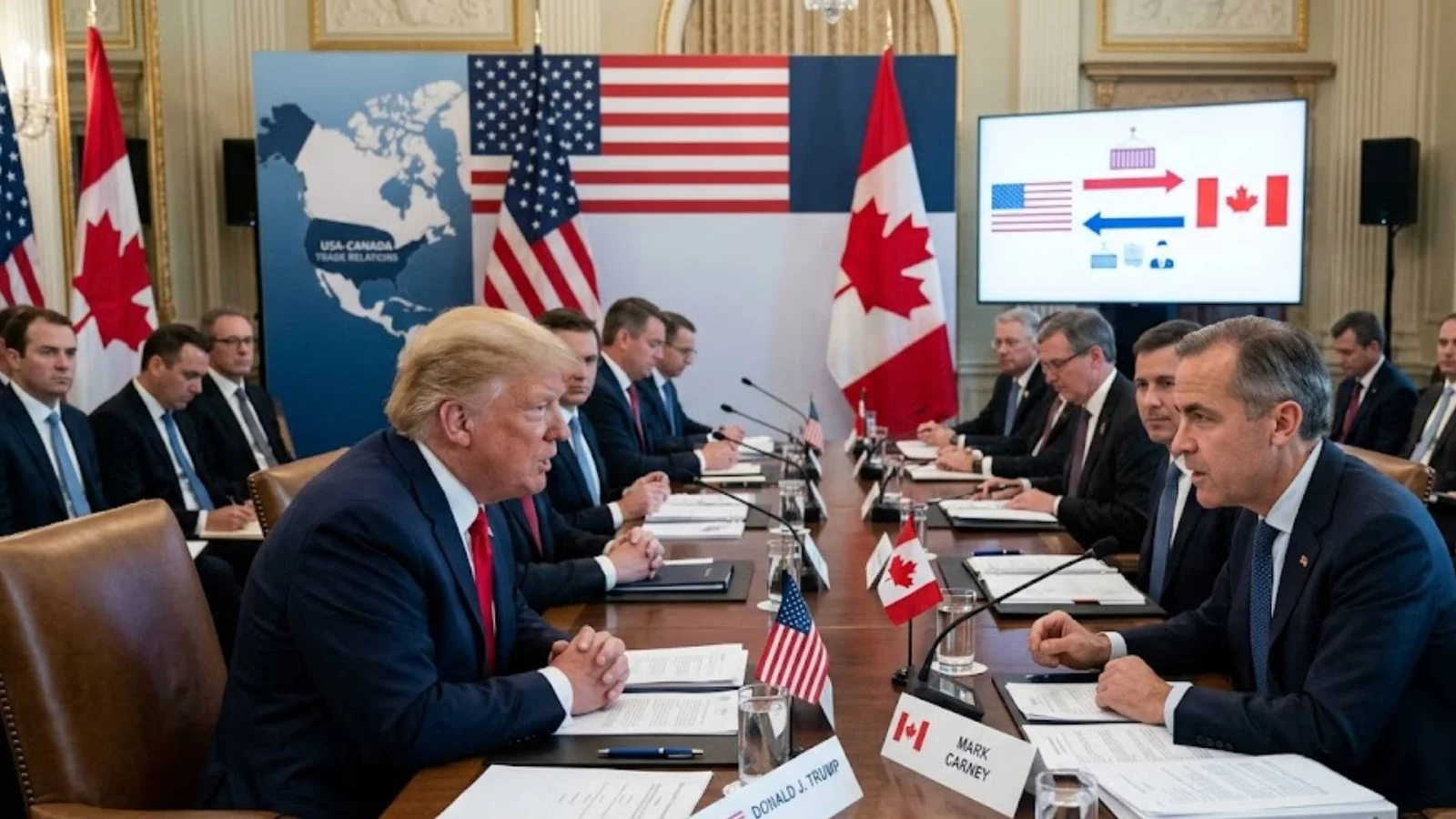
Ottawa/Washington (Web News): Trade tensions between the United States and Canada have intensified after U.S. President Donald Trump announced new 50% tariffs on several Canadian products. Despite the growing dispute, Canadian Prime Minister Mark Carney and President Trump have agreed to accelerate trade negotiations in an effort to reach a comprehensive agreement in the coming weeks.
Prime Minister Carney confirmed that he spoke with President Trump by phone on Tuesday morning, where both leaders agreed to continue discussions aimed at resolving the ongoing trade conflict.
Trump Announces New 50% Tariffs
President Donald Trump signed a series of executive orders on Monday that will impose 50% tariffs on a range of Canadian imports beginning 30 days from the announcement.
According to the White House, these tariffs will not qualify for exemptions under the Canada-United States-Mexico Agreement (CUSMA), signaling a tougher U.S. stance on trade with Canada.
The U.S. administration argues that Canada has engaged in unfair and discriminatory trade practices that have negatively affected American businesses and workers.
Why Is the U.S. Objecting?
The White House has identified several Canadian policies as major concerns, including:
- Restrictions on the sale of American alcoholic beverages in most Canadian provinces.
- Canada’s supply management system for dairy products.
- Import quotas affecting American-made vehicles.
Currently, all Canadian provinces except Alberta and Saskatchewan continue to restrict the sale of U.S. alcohol in government liquor stores.
Alcohol Sales Are a Provincial Decision
When asked whether Canada would allow U.S. alcohol back into provincial stores, Prime Minister Carney emphasized that the decision rests with provincial governments rather than the federal government.
He noted that the restrictions were introduced in response to U.S. tariffs and threats against Canadian sovereignty and continue to enjoy strong public support in several provinces.
Carney added that changes to these policies should only be considered after a comprehensive trade agreement is reached with the United States.
Canada Keeps All Options Open
Prime Minister Carney stated that if the United States proceeds with the proposed 50% tariffs, Canada will consider all available response options to protect its economic interests.
He stressed that Canada’s priority remains securing a balanced trade agreement that benefits both countries and complies with the CUSMA framework, while leaving the door open to retaliatory measures if necessary.
Ontario Premier Doug Ford Responds
Ontario Premier Doug Ford strongly criticized the latest U.S. measures, stating that his government has no plans to return American alcohol products to LCBO stores.
Ford said Canada should stand united against continued economic pressure from Washington rather than making concessions.
He urged the federal government to adopt a clear national strategy and respond with equivalent tariffs if the United States moves forward with its new trade measures.
Ford Calls Trump a “Bully”
Doug Ford sharply criticized President Trump, accusing him of repeatedly attempting to intimidate Canada.
He compared Trump’s approach to schoolyard bullying, arguing that such behavior must be confronted rather than rewarded. Ford reiterated that Canada should adopt a “tariffs for tariffs” strategy if the new U.S. duties take effect.
Trump’s Position
Speaking at the White House, President Trump said he has great respect for the Canadian people but claimed that Canada cannot economically survive without the United States.
He argued that Canada has treated the U.S. unfairly in trade for many years and claimed that previous American presidents failed to respond effectively.
Trump also clarified that the proposed 50% tariffs are separate from earlier disputes involving wildfire smoke drifting into the United States. He again criticized Canada’s forest management practices.
Legal Basis for the New Tariffs
According to the White House, the proposed tariffs are being imposed under Section 338 of the U.S. Tariff Act of 1930.
The law authorizes the U.S. President to impose additional import duties on countries that engage in discriminatory or unequal treatment of American exports.
Trade Talks Continue Despite Rising Tensions
Although both governments have agreed to intensify negotiations, significant differences remain unresolved. If no comprehensive trade agreement is reached within the next few weeks, the proposed 50% U.S. tariffs could take effect after 30 days, further straining North American trade relations and increasing economic uncertainty for businesses on both sides of the border.
