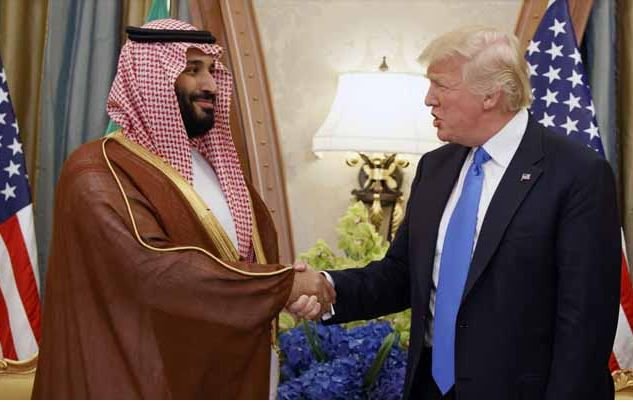
The True Post(Web News) US President Donald Trump’s confirmation of a meeting with the Saudi Crown Prince next week is not only an increase in diplomatic activity but also points to a new political landscape in the region.
Trump’s statement that “this meeting is not just a meeting” encapsulates a range of possible possibilities—including defense issues, a new alignment in the Middle East, and new ways of relating to Israel.
Saudi Arabia’s interest in the F-35 and other advanced fighter jets is evidence that Riyadh wants to improve its military balance in the region’s rapidly changing geopolitical situation. For the United States, this is an opportunity for a major trade deal, while for Saudi Arabia, it is a step to further strengthen its regional influence and defense sovereignty. However, this issue is not limited to military purchases, but may also have far-reaching diplomatic implications.
Trump’s speech makes it clear that the Abraham Accords are also going to take center stage once again in South Asian and Middle Eastern politics. It is being expressed that Saudi Arabia may sooner or later normalize relations with Israel—a step that would completely change the regional power structure. But this decision is not only a requirement of Saudi Arabia’s own political interests, but also a highly sensitive matter regarding its religious and moral status in the Muslim world.
The effects of this proposed meeting will be far-reaching: the United States wants to revitalize its policies in the Middle East through this means, Saudi Arabia wants to advance its defense and diplomatic objectives, while other countries in the region are closely watching the possible effects of these changes. Now it remains to be seen whether this meeting really proves to be “just a meeting” or whether it marks the beginning of a new era in Middle Eastern politics. However, one thing is certain: the outcome of this meeting will have significant effects on the balance of power in the region and future diplomatic strategies.
 Ishtiq Ahmed Send an email November 15, 2025


![]New Era of Global Alliances](/wp-content/uploads/2026/07/Why-the-World-Is-Entering-a-New-Era-of-Global-Alliances-390x220.jpg)