Muhammad Aman Ullah
Published: August 3, 2026
Calgary: Canada’s ambitious expansion of nuclear power has sparked fresh debate over the country’s energy independence after it was revealed that the first generation of small modular reactors (SMRs) will rely on foreign companies for uranium enrichment and fuel production.
The development comes as Prime Minister Mark Carney continues to emphasize energy security as a key pillar of Canada’s national sovereignty.
Darlington SMR Project Moves Forward
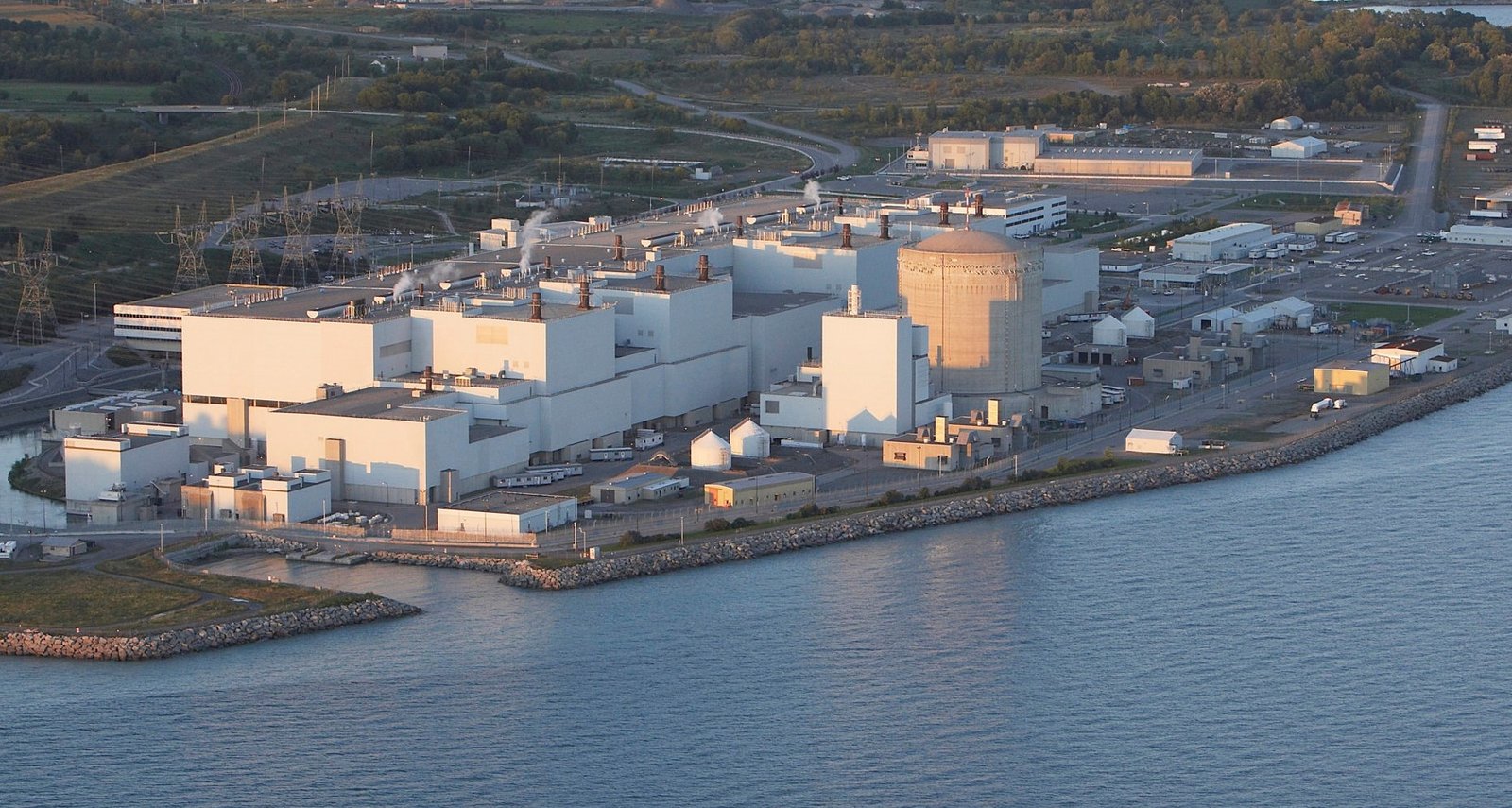
Construction is underway on the first of four BWRX-300 Small Modular Reactors (SMRs) at the Darlington New Nuclear Project in Clarington, Ontario.
The first reactor is expected to begin supplying electricity to Ontario’s power grid by the end of 2030, while the remaining three units are scheduled for completion during the mid-2030s.
Different from Canada’s Traditional CANDU Reactors
Unlike Canada’s long-established CANDU nuclear reactors, which operate using natural uranium that does not require enrichment, the new BWRX-300 reactors will use low-enriched uranium (LEU).
Because Canada currently lacks commercial uranium enrichment facilities, the fuel will need to be processed outside the country before being used in the reactors.
International Supply Chain
Under the proposed fuel supply chain, Cameco will mine uranium in Saskatchewan before sending it to its Port Hope, Ontario facility for initial processing.
The material will then be transported to the United States for enrichment.
Additional enriched uranium may also be supplied by Orano of France and Urenco of the United Kingdom, while finished fuel assemblies are expected to be manufactured by an American company.
Experts Raise Energy Security Concerns
Energy experts argue that the new approach differs significantly from the original philosophy behind Canada’s CANDU program, which was specifically designed to avoid reliance on foreign enriched uranium.
Professor Mark Winfield of York University warned that geopolitical tensions or future trade disputes could disrupt Canada’s nuclear fuel supply if enrichment services remain dependent on foreign countries.
According to analysts, supply chain diversification helps reduce risk, but it does not eliminate Canada’s dependence on external partners.
Ontario Government Defends Decision
Ontario Energy Minister Stephen Lecce said Canada currently does not have a domestically developed commercial SMR technology ready for deployment.
He said the province selected the most advanced and commercially viable technology available and has secured fuel agreements with multiple suppliers in the United States, France, and the United Kingdom to strengthen supply chain resilience.
Cost Concerns Remain
Professor M. V. Ramana of the University of British Columbia said first-of-a-kind SMR projects may ultimately prove more expensive than conventional large-scale nuclear reactors.
While the Darlington project is expected to become the first commercial SMR deployment among G7 countries, experts caution that construction costs, operating performance, and long-term economic viability remain uncertain until the reactors begin operating.
Could Canada Build Its Own Enrichment Industry?
Some experts believe Canada could eventually establish its own uranium enrichment capability to improve energy independence.
However, doing so would require billions of dollars in investment, advanced technology, strict regulatory oversight, and compliance with international nuclear safeguards.
Natural Resources Canada has not announced plans to launch commercial uranium enrichment domestically but says the federal government intends to work with provinces and industry through a proposed Nuclear Fuels Table to evaluate future fuel supply needs.
Nuclear Waste Challenges
Experts have also warned that the new SMRs will produce a different type of spent nuclear fuel than existing CANDU reactors.
Canada’s current C$26 billion nuclear waste management strategy was developed around CANDU technology, and analysts say the long-term costs of managing waste generated by SMRs have yet to be fully assessed.
As Canada accelerates its transition toward cleaner electricity, balancing energy security, technological innovation, and long-term sustainability is expected to remain at the center of the country’s nuclear policy debate.