Muhammad Amanullah | The True Post
Date: November 2, 2026
Prime Minister Mark Carney has called by-elections in six federal constituencies across three Canadian provinces, with voters set to cast their ballots on December 7.
The elections will take place in Quebec, Ontario and Saskatchewan following the resignations of members of Parliament, leaving the six seats vacant.
According to an announcement from the Prime Minister’s Office, three by-elections will be held in Quebec in the ridings of Laurier–Sainte-Marie, Rosemont–La Petite-Patrie and Saint-Hyacinthe–Bagot–Acton.
The three vacant seats were previously held by the Liberal Party, the New Democratic Party (NDP) and the Bloc Québécois, respectively.
Two by-elections will take place in Ontario, in Brantford–Brant South and Scarborough North. The sixth contest will be held in Saskatchewan’s Yorkton–Melville riding.
Brantford–Brant South and Yorkton–Melville were previously represented by Conservative MPs, while Scarborough North was held by the Liberals.
Carney’s Liberal government has already secured a parliamentary majority following earlier by-election victories and the defection of five MPs from other parties to the Liberals. The upcoming contests will give political parties another opportunity to strengthen their positions.
Poilievre Urges Canadians to Vote Against Liberals
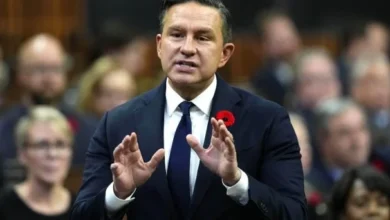
Following the announcement, Conservative Party Leader Pierre Poilievre appealed to Canadians on social media to choose a different direction for the country.
He said the Conservative Party’s plan focuses on reducing the cost of living, protecting jobs and reforming the immigration system.
Speaking at a news conference on Sunday, Poilievre said the by-elections offered working Canadians an opportunity to vote against Carney’s policies. He claimed that government decisions had contributed to rising costs for fuel, groceries and housing.
Seats Vacant Following Parliamentary Resignations
The by-elections were triggered by the resignations of MPs who left the House of Commons for various reasons, including diplomatic appointments, a return to provincial politics and retirement.
Since the 2025 federal election, 13 members of the 343-seat House of Commons have resigned.
Under Canadian election law, the prime minister must call a by-election within 11 to 180 days after a parliamentary seat becomes vacant.
Conservative Party Faces Challenge From Former Supporter in Brantford
The Brantford–Brant South by-election in Ontario is attracting particular attention, as longtime Conservative supporter and pastor Dave Carroll is running as an independent candidate.
Carroll had previously sought the Conservative nomination. However, instead of holding a local nomination contest, the party leadership selected Brantford Mayor Kevin Davis as its candidate.
Carroll criticised the leadership’s decision on social media, arguing that the party had bypassed a nomination process that had been followed for decades.
He said the decision might be legally valid but was not well received at the local level.
His independent campaign could divide Conservative support in the riding, potentially benefiting the Liberal candidate.
Liberals Challenge Longstanding Conservative Dominance in Saskatchewan
In Saskatchewan’s Yorkton–Melville riding, the Liberal Party has nominated Yorkton Mayor Aaron Kienle. He will face Conservative candidate Nelson Poll, a farmer who also operates a furnace-cleaning business.
The riding has been dominated by the Conservative Party and its predecessors, the Reform Party and the Canadian Alliance, for more than 30 years.
Since the riding was established in 1968, the Liberals have never won the seat.
Conservative MP Cathay Wagantall secured more than 77 per cent of the vote in the 2025 federal election but resigned in August this year.
The Liberals will now attempt to break the Conservatives’ long-standing hold on the constituency.
Three Quebec Ridings to See Contests Between Major Parties
The Laurier–Sainte-Marie seat became vacant after former federal environment minister Steven Guilbeault resigned from Parliament following disagreements with Prime Minister Mark Carney over environmental policy.
The Liberals have nominated Guy Cormier, former president and chief executive of the Desjardins Group.
The Bloc Québécois has selected Zumretay Arkin, a former vice-president of the World Uyghur Congress, while the NDP has nominated epidemiologist Nima Machouf.
The Saint-Hyacinthe–Bagot–Acton seat became vacant after former Bloc Québécois MP Simon-Pierre Savard-Tremblay resigned. He left the Bloc’s parliamentary caucus in June and later won a seat in Quebec’s provincial election as a candidate for the separatist Parti Québécois.
The Liberal Party has nominated former provincial legislator Chantal Soucy, who served in the Quebec National Assembly for eight years as a member of the Coalition Avenir Québec.
The Bloc Québécois has nominated Caroline Emond, former director general of the International Dairy Federation.
The third Quebec contest will take place in Rosemont–La Petite-Patrie, where the seat became vacant following the resignation of former NDP MP Alexandre Boulerice.
Boulerice resigned in August to enter provincial politics and subsequently won a seat as a candidate for Québec solidaire.
The riding was the NDP’s only successful constituency east of Manitoba in the last federal election.
The Liberals have nominated human rights advocate Jean-Sébastien Vallée, while the NDP has selected Quebec activist Pierre Séré.
Liberals Seek to Retain Scarborough North
In Ontario’s Scarborough North riding, former Liberal MP Shaun Chen resigned in August after experiencing medical problems following a vehicle accident in 2025.
The Liberal Party has nominated accountant James Li to defend the seat.
The party will be seeking to maintain its hold on the constituency as it prepares for the December 7 vote.
Carney’s Liberals Have Recorded Several By-Election Victories
The Liberal Party has enjoyed a series of by-election victories under Carney’s leadership this year.
In April, a new election was held in Quebec’s Terrebonne riding after the Supreme Court ordered a fresh vote because of problems involving mail-in ballots during the 2025 federal election.
By-elections were also held in the Liberal strongholds of University–Rosedale and Scarborough Southwest in Toronto, where Liberal candidates won.
Those three victories, combined with the defection of five MPs from other parties to the Liberals, helped Carney’s government secure a parliamentary majority.
The Liberals subsequently won all three seats contested in additional by-elections held on August 31. These included Chicoutimi–Le Fjord, which the party took from the Conservatives, as well as Beaches–East York and North Vancouver–Capilano.
The December 7 contests will therefore be closely watched as the Liberals seek to consolidate their parliamentary position and the Conservatives attempt to build support against the government.
Issues including inflation, housing costs, immigration and employment are expected to feature prominently in the campaigns.