Supporters of Alberta’s independence movement have vowed to continue their campaign despite losing the referendum on separating the province from Canada. Although approximately 75 per cent of voters supported remaining in Canada, separatists say concerns about political change, public issues and the federal government remain unresolved.
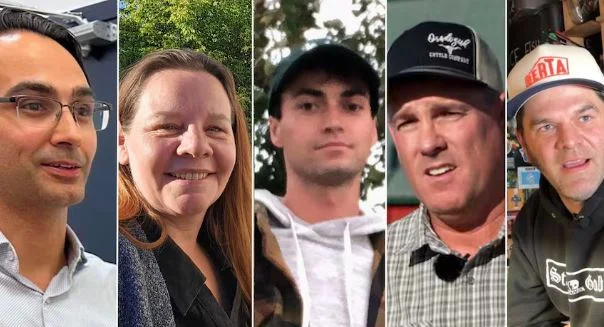
During the referendum campaign, Canadian broadcaster CBC News sought to understand the views of Alberta residents through personal essays, community focus groups and small public consultations. Following the announcement of the results, the broadcaster reconnected with some residents who had supported separation to learn how they viewed the outcome and what they hoped would happen next.
Their responses reflected a range of emotions, including hope, disappointment and reassurance. While some were discouraged by the result, they believed the referendum had brought an important political issue in Alberta into the public spotlight.
Vicki Bayford: The Debate Over Separation Is No Longer Hidden
Vicki Bayford, who lives in Innisfail, Alberta, checked the referendum results on Tuesday morning after completing her duties as an observer during the vote-counting process.
Innisfail is a town of approximately 9,000 people north of Calgary. Bayford said that, at one point, the share of votes supporting separation at her local polling station appeared to be approaching 50 per cent, giving her reason to feel optimistic.
However, when the province-wide results showed support for separation at approximately 25 per cent, she was disappointed, although not surprised.
She said she had always known the campaign would be a difficult struggle.
Bayford works in the oil and gas sector and has been actively involved in Alberta’s independence movement since 2020. In her view, the separation proposal failed partly because many conservative voters decided to give Premier Danielle Smith an opportunity to pursue changes while Alberta remained part of Canada.
Nevertheless, Bayford believes the movement has benefited from its activities over the past 18 months.
She said that when she became involved in the issue in 2020, the debate over independence was not as openly discussed as it is today. The issue has since attracted considerable public attention.
Bayford added that supporters had built new relationships and friendships while collecting petition signatures and attending public gatherings. She believes organizations supporting independence will try to maintain those social connections.
Winning Support Requires Bringing All Albertans Together
Bayford acknowledged that the independence movement cannot succeed by relying solely on people who already support separation. It must also find common ground with Albertans who hold different political and social views.
During the referendum campaign, she wrote an opinion piece for CBC News. She later discussed the issue with three other writers on the programme West of Centre.
One of those writers was Matthew Morin, a gay man who works in the social services sector in Calgary.
According to Bayford, one of Morin’s observations particularly challenged her thinking. Morin said he shared many of the feelings and grievances expressed by Albertans but was uncertain whether people like him would have a place in the future envisioned by the leaders of the independence movement.
Bayford described the observation as eye-opening.
In her view, the independence movement cannot succeed unless Albertans agree that everyone who calls the province home deserves equal importance and consideration.
She expressed hope that, following the referendum, people would treat one another with greater kindness and begin discussing their differences in a calmer and more constructive manner.
Matthew Morin: People Are Angry, but Support for Separation Is Insufficient
Matthew Morin also shared his assessment of the referendum results.
In an earlier essay for CBC News, he explained that uncertainty in everyday life and the perception that political leaders do not care about people’s struggles were among the main reasons he had become interested in the independence debate.
Morin believes some of the support for separation in Alberta should be understood as a protest vote. People may be frustrated with government policies and their personal circumstances without necessarily wanting Alberta to leave Canada.
He said people were angry, which helped explain why most of the nine referendum questions received support from 50 per cent or more of voters. However, that dissatisfaction was not enough to produce a majority in favour of separation.
According to Morin, what happens next will depend on the government’s ability to take practical measures that improve people’s everyday lives.
He warned that global uncertainty and tensions could intensify further. If governments fail to introduce meaningful changes that benefit ordinary people, public frustration and anger could grow.
Danielle Smith’s Leadership and Government Policies Under Scrutiny
Following the referendum, political observers are considering how the results could affect the leadership of Alberta Premier Danielle Smith. Questions have also emerged over whether committed separatists within her party could increase political pressure on her.
Although Morin is not a committed supporter of separation, he has supported Smith. During the previous election campaign, he went door to door to encourage voters to support her. He also joined the United Conservative Party so that he could vote in the party’s leadership selection.
Morin said he had hoped Smith would emerge as a leader from the grassroots who could deliver meaningful change.
In his assessment, Smith has introduced some changes, with some producing positive outcomes and others negative ones. He noted that such mixed results can occur under any political leader.
The referendum has therefore raised broader questions about how the provincial government will respond to public dissatisfaction and whether it can address concerns that extend beyond the question of independence.
What Lies Ahead for Alberta Politics After the Referendum?
The referendum results showed that Alberta’s independence movement has the backing of a significant minority of voters, but the majority preferred to remain part of Canada.
For separatists, a major challenge now is to broaden their appeal and better understand the concerns of Albertans from different backgrounds.
Meanwhile, Smith’s government will face pressure to consider public opinion on immigration, public services and provincial powers, as reflected in the referendum questions.
The comments from Matthew Morin and Vicki Bayford suggest that the rejection of separation has not ended Alberta’s political debate.
The future direction of that debate will depend largely on how effectively the government addresses public grievances and whether political leaders can build greater understanding and consensus among residents with differing views.
For now, the referendum has rejected the immediate prospect of separation, but the underlying questions about Alberta’s political future, its relationship with Ottawa and the everyday concerns of its residents remain unresolved.