Muhammad Amanullah
Date: October 26, 2026
The True Post (Web News) —Voters in Alberta have backed five provincial government proposals related to immigration while rejecting proposals concerning constitutional reform, according to the reported results of a controversial referendum in the Canadian province.
The referendum asked Albertans to vote on several issues, including the possibility of the province separating from Canada and nine additional questions concerning immigration and constitutional matters.
The United Conservative Party (UCP) government, led by Alberta Premier Danielle Smith, introduced the questions to gauge public opinion on proposed policy changes and expanded provincial authority.
According to the reported results, all five immigration-related questions received majority support, indicating that a majority of participating voters favoured some changes to immigration policy and greater provincial control over related matters.
However, support varied across the individual questions, and the results do not automatically mean that the proposed changes will become law.
Elections Alberta Reports Completion of Manual Ballot Count
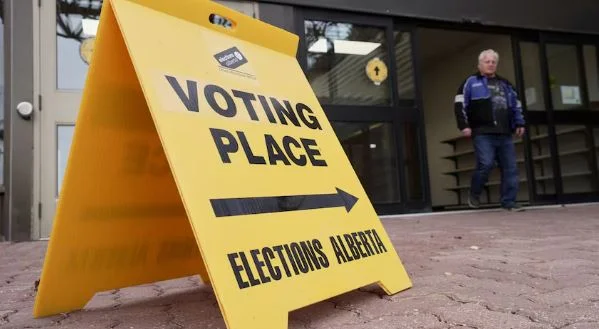
Elections Alberta, the province’s electoral agency, said in a statement issued on Sunday afternoon that the counting of ballots had been completed on Saturday night.
The counting and release of results took approximately three days longer than the original target. Officials had aimed to complete the count and publish the results within the 48-hour period specified under the referendum’s procedures.
According to the report, Elections Alberta said a total of 205,746,612 ballots had been counted manually and described the figure as the largest number of ballots ever counted by hand in an electoral process in Canada.
However, this figure appears extraordinarily high for a provincial referendum and should be independently verified before publication.
The final number of participating voters and additional details about the results are scheduled to be formally released on October 29, according to the supplied report.
Proposal to Require Proof of Canadian Citizenship Receives Strongest Support
Among the immigration-related questions, the proposal identified as Question 5 received the highest level of support.
The measure proposed requiring voters to provide proof of Canadian citizenship when voting in Alberta provincial elections.
According to the reported results, 58 per cent of voters supported the proposal, making it the most popular question in the referendum.
The proposal reflects calls for stricter requirements governing voter eligibility in provincial elections. Any implementation, however, would depend on the relevant legal and policy processes.
Another major question sought to give Alberta greater authority over immigration.
Approximately 55 per cent of voters supported the proposal, according to the report.
The provincial government has argued that greater control over immigration would allow Alberta to develop policies better suited to its needs, including potentially reducing the number of newcomers entering the province.
The extent to which the province could implement such changes would depend on the division of responsibilities between Alberta and the federal government, as well as any required legislative or administrative measures.
Proposals Affecting Temporary Residents and Public Services Also Win Majority Support
Three other referendum questions concerned restrictions on access to public and social services for certain temporary residents.
According to the reported results, the proposals received the following levels of support:
- First proposal: 52.6 per cent.
- Second proposal: 53 per cent.
- Third proposal: 52 per cent.
The results suggest that the proposals secured relatively narrow majorities, with support ranging from 52 per cent to 53 per cent.
The questions form part of a wider debate in Alberta about immigration levels, provincial responsibilities and eligibility for publicly funded services.
Nevertheless, a majority vote in favour of a proposal does not itself establish a new legal restriction. The government may still need to determine the scope of any changes and pursue the appropriate legal or policy steps.
Danielle Smith Says Government Will Proceed Cautiously
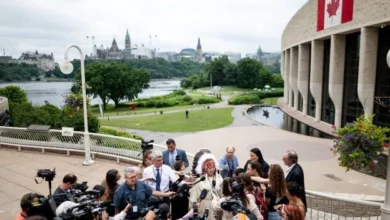
Speaking to reporters on Wednesday as the referendum results were emerging, Premier Danielle Smith said her government would initially prioritise changes to policies affecting immigrants who come to Alberta for economic purposes.
Smith indicated that her government would take a cautious approach to the other immigration-related questions and examine the results before deciding what measures might be appropriate.
She acknowledged that changing rules midway can create difficulties for people who moved to Alberta under existing regulations and developed expectations based on those rules.
Smith said she wanted to proceed carefully and take time to interpret what voters had expressed through the referendum.
Her comments suggest that, although the government intends to consider changes to immigration policy, it does not necessarily plan to implement every proposal immediately or in the same manner.
The government will also need to consider the practical consequences of any changes for existing residents and newcomers who have made decisions based on current rules.
What the Referendum Results Could Mean for Alberta
The reported results provide the Smith government with a political basis for considering changes to immigration policy, proof-of-citizenship requirements for provincial elections and access to certain public services.
The support for all five immigration-related questions indicates that the proposals received majority backing among voters who participated in the referendum.
However, the strength of that support differed from question to question, and the reported margins on several measures were relatively narrow.
The results should therefore be considered alongside the final official figures, the wording of each referendum question and the legal authority available to the provincial government.
The referendum also raises broader questions about Alberta’s relationship with the federal government and the limits of provincial authority over immigration and public services.
For now, the outcome gives the provincial government a mandate to consider the proposals politically, but further legal, legislative or administrative action may be required before any changes take effect.
The final official results, expected on October 29 according to the supplied report, should provide further clarity on voter participation and the outcome of the individual questions.