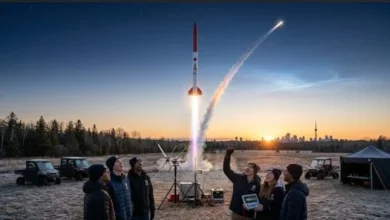
NASA has successfully tested an advanced autonomous landing technology designed to help spacecraft land safely on the Moon and other planetary surfaces.
The system can analyse the terrain around a spacecraft, identify potential hazards and distinguish between safe and dangerous landing locations. It can also help automatically redirect a spacecraft towards a safer landing site if the originally selected area is considered hazardous.
The development marks an important step in NASA’s efforts to establish a sustained human presence on the Moon, where safe landings remain a major technical challenge.
Successful Test Conducted in California’s Mojave Desert
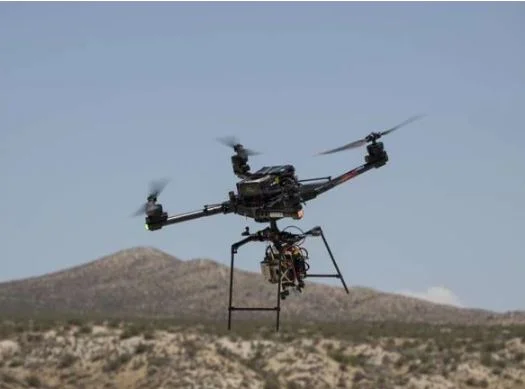
NASA conducted a series of simulated lunar landing tests in California’s Mojave Desert using a drone equipped with advanced navigation and guidance technology.
During the trials, the drone performed flight and landing exercises designed to replicate conditions that future spacecraft could encounter while descending towards the lunar surface.
The main objective was to determine whether a spacecraft could rapidly assess the terrain around it during descent and avoid dangerous areas.
The system collected information about the surface, generated digital maps and evaluated potential landing locations to identify safer areas.
LiDAR Sensors Help Create Detailed Terrain Maps
The technology uses Light Detection and Ranging (LiDAR) sensors to measure distances and analyse the surrounding terrain.
These sensors emit laser pulses and calculate the distance to objects and surfaces by measuring how long the reflected light takes to return.
The collected information is then used to create highly detailed digital maps of the terrain.
These maps can help identify rocks, craters, slopes and other obstacles that could pose a threat during landing.
By analysing the surface in detail, the system can help spacecraft avoid hazardous locations and identify more suitable landing areas.
System Can Redirect Spacecraft Away from Dangerous Areas
One of the most important features of NASA’s technology is its ability to do more than simply map the terrain.
It can also assess potential hazards and support decisions about where a spacecraft should land.
If the system identifies that the designated landing area is unsafe, it can guide the spacecraft towards an alternative location.
This capability could allow future lunar landers to avoid rocky surfaces, deep craters and uneven terrain while selecting a safer landing point.
Autonomous navigation could also reduce the need for direct human intervention during critical landing operations and help minimise the risk of accidents.
What Is NASA’s SPLICE Technology?
NASA’s system is known as Safe and Precise Landing – Integrated Capabilities Evolution (SPLICE).
It has been developed by researchers at NASA’s Johnson Space Center in Houston, Texas.
SPLICE combines advanced navigation, sensing, digital terrain mapping and autonomous guidance capabilities to help spacecraft better understand their surroundings during descent.
Rather than relying entirely on a pre-selected landing location, the technology is designed to help spacecraft assess surface conditions in real time and identify safer landing opportunities.
Important Development for NASA’s Future Lunar Base
NASA is working towards long-term human exploration of the Moon, including plans for a sustained human presence and the development of future lunar infrastructure.
Achieving these goals will require spacecraft, scientific equipment and construction materials to be delivered safely to the lunar surface.
The lunar south pole is among the areas being considered for future exploration and infrastructure. However, identifying suitable landing sites in these regions remains a significant technical challenge.
Technologies such as SPLICE could make future crewed missions safer and improve the delivery of scientific instruments, equipment and construction supplies.
Potential Applications on Mars and Other Planets
The potential applications of autonomous landing technology extend beyond the Moon.
Similar systems could eventually support missions to Mars and other planetary destinations, where landing conditions can be difficult to assess remotely.
Communication delays between Earth and distant spacecraft can make it difficult for mission controllers to provide immediate instructions during critical operations.
Autonomous navigation systems could help spacecraft analyse their surroundings independently and use available information to identify safer landing locations.
NASA’s SPLICE technology represents an important development in autonomous spacecraft navigation and could contribute to safer landings during future lunar and planetary exploration missions.