Muhammad Amanullah | August 6, 2026
The controversy surrounding McGill University is not limited to a single lawsuit or a series of campus protests. Instead, it reflects a broader global tension that spread to universities around the world following the outbreak of the Israel-Palestine war after October 7, 2023.
McGill University, one of Canada’s best-known institutions, has long been associated with multiculturalism, diverse viewpoints and freedom of expression. However, the recent controversy has raised difficult questions about how universities should balance students’ rights, campus safety and freedom of speech during highly charged political conflicts.
Where Did the Controversy Begin?
The Hamas attack on Israel on October 7, 2023, followed by the war in Gaza, triggered strong reactions around the world.
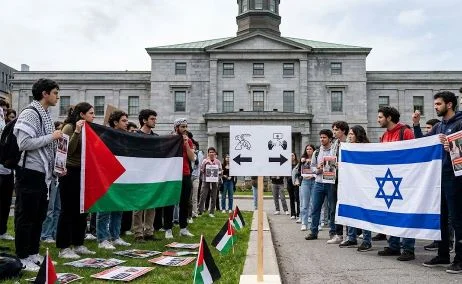
As in many other countries, pro-Palestinian demonstrations began across Canada. University campuses became important centers for these activities as students expressed their views on the war, human rights and the broader situation in the Middle East.
Students at McGill University also organized protests and other activities in support of Palestinians and criticized Israeli government policies.
The Issue Was About More Than Protests
According to the concerns raised during the controversy, the debate intensified when some Jewish students and organizations said that certain protests and statements had created an environment in which they felt unsafe.
They argued that, in some instances, criticism of Israel crossed a line into hostility toward Jewish people, contributing to increased tensions on campus.
Pro-Palestinian students and supporters, however, argued that criticism of the Israeli government and its policies should not automatically be treated as anti-Jewish sentiment. They maintained that they have the right to speak out on human rights issues and the war in Gaza.
This disagreement became one of the central issues surrounding the McGill controversy.
Freedom of Expression or Hate Speech?
The McGill dispute highlights a much broader question: where should the limits of freedom of expression be drawn in a democratic society?
Universities have traditionally provided spaces where students and academics can debate difficult and controversial issues. Students have the right to criticize governments, wars and international policies.
However, the situation becomes more complicated when members of a particular community feel that political debate is threatening their identity, religion or personal safety.
This creates a major challenge for university administrators, who must protect freedom of expression while also ensuring that students can study in a safe environment.
Why Has Pressure on University Administrators Increased?
McGill University and other Canadian institutions have faced criticism over how they have handled protests and political activism on campus.
Some groups have argued that universities should take stronger measures to protect students, while others have maintained that institutions must defend freedom of expression despite political pressure.
The disagreement has also moved into the legal arena, where questions have been raised about whether universities have taken adequate steps to protect students and maintain a safe campus environment.
Why Does the McGill Case Matter to Canada?
Canada presents itself as a multicultural society where people from different religious, cultural and national backgrounds live together.
For that reason, the McGill controversy goes beyond the boundaries of one educational institution. It has become part of a larger Canadian debate over how competing viewpoints and communities can coexist during highly sensitive international conflicts.
The case also raises questions about how universities can maintain neutrality while dealing with political activism and protests involving deeply divisive global issues.
Similar Controversies at Universities Around the World
McGill is not alone in facing these challenges.
Universities across the United States, United Kingdom and Europe have experienced protests, arrests, debates over campus policies and disputes over freedom of expression since the Israel-Palestine war began.
The Middle East conflict has increasingly become more than a foreign-policy issue. It is also connected to identity, religion, human rights and domestic politics.
As a result, debates surrounding the conflict have increasingly appeared in classrooms, student organizations and university campuses.
The Bigger Question Remains
The controversy at McGill University is likely to remain part of both the legal and social debate in Canada.
The central question is whether universities can successfully maintain an open academic environment when different groups hold deeply opposing views about the same international conflict.
McGill’s experience demonstrates that the challenge facing modern universities is not simply providing education. Institutions must also find ways to protect freedom of expression while maintaining a safe, respectful and fair environment for students from different backgrounds.
The outcome of this debate could have implications beyond McGill, particularly as Canadian universities continue to deal with political activism and tensions surrounding international conflicts.