The True Post (Web News) | MUHAMMAD AMANULLAH | October 20, 2026
Political attention has turned to vote counting following Alberta’s provincial referendum on Monday night, with voters awaiting the results of a key question about the province’s future within Canada.
The central issue is whether Alberta should remain part of Canada or move toward another referendum on separation that could have binding legal consequences. The outcome is expected to offer important insights into Alberta’s political direction, its relationship with the federal government and the strength of the province’s separatist movement.
Question 10 on the ballot has attracted particular attention. It asks voters whether Alberta should remain within Canada or whether the provincial government should begin the legal process required to pursue a further referendum on separation.
The result could shape the next stage of the debate over Alberta’s autonomy and its place within the Canadian federation.
Why Did Danielle Smith Include the Separation Question?
Alberta Premier Danielle Smith included the separation-related question in this year’s referendum after competing campaigns emerged across the province. Groups supporting Alberta’s continued place in Canada and those advocating independence gathered signatures to advance their respective positions.
Smith has said she personally voted in favour of Alberta remaining in Canada. Nevertheless, including the question has brought the province’s debate over autonomy, federal authority and independence into the national spotlight.
According to the reported counting procedure, Elections Alberta will count votes for Question 10 first, followed by the remaining nine questions, which cover immigration policy and constitutional issues.
The results will help establish the level of public support for pursuing the separation process, although they will not, on their own, determine Alberta’s constitutional future.
Polling Delays Extend the Wait for Results
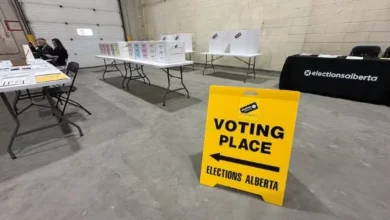
Problems with polling arrangements contributed to delays on referendum night. Some polling stations opened late, and more than 100 locations reportedly remained open beyond the scheduled closing time of 8 p.m.
Unofficial results were not expected before 10 p.m. local time, extending the wait for voters and political groups closely following the separation question.
More than 1.3 million people had already cast ballots through advance voting and mail-in voting before referendum day. The figure demonstrates substantial participation in the process, but turnout alone does not indicate how many voters support independence or remaining in Canada.
The final vote totals will provide a clearer picture of public opinion.
Separatists Say Independence Could Reduce Federal Control
Supporters of Alberta independence argue that leaving Canada could free the province from federal taxes and regulations, create new opportunities for economic development and give Alberta greater control over its affairs.
Jeff Rath, a lawyer and prominent supporter of the independence movement, told CityNews on referendum day that some voters viewed the process as an opportunity to express frustration with the federal government.
According to Rath, supporters of independence hope to eliminate federal income taxes, reduce one layer of government and gain greater control over provincial affairs.
He also indicated that separatists would continue their efforts regardless of the referendum’s outcome.
Rath argued that if support for independence exceeded 40 per cent, Smith should resign as premier. That is his political demand, not an established constitutional requirement or an automatic consequence of the vote.
Opponents Warn of Economic and Administrative Uncertainty
Opponents of separation warn that leaving Canada could create serious economic and administrative challenges for Alberta.
They argue that uncertainty surrounding the province’s future could affect investment and business activity. Alberta could also face difficult decisions about debts, public expenditure and responsibilities currently managed or shared through the federal system.
The future of federally provided services would be another major issue. Separation would require decisions about how those services would be funded, administered and delivered.
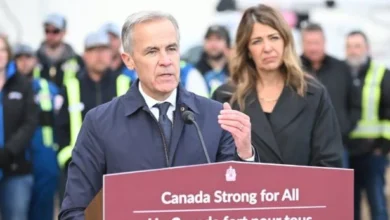
Prime Minister Mark Carney visited Alberta the previous week and participated in events supporting national unity ahead of the referendum. His involvement brought further national attention to the debate.
Forever Canadian Campaign Questions the Need for a Referendum
Thomas Lukaszuk, founder of the pro-unity campaign Forever Canadian, questioned whether the referendum was necessary, saying that many Alberta residents he had spoken with did not understand why the vote was being held.
Lukaszuk argued that a large majority of Albertans had not called for the referendum. He also said the process could cost taxpayers more than $300 million.
Despite his opposition to the vote, Lukaszuk acknowledged that the debate had given people an opportunity to reflect on their Canadian identity and their relationship with the country.
He warned that, whatever the result, further efforts would be needed to bridge political divisions and rebuild public trust.
What Could the Result Mean for Alberta’s Political Future?
The referendum could become an important measure of the separatist movement’s political strength.
If the independence proposal receives substantial support, pressure could grow on Alberta’s provincial government and federal leaders to address the province’s grievances and discuss its future relationship with Ottawa.
A decisive majority in favour of remaining in Canada, by contrast, could weaken the separatist movement’s immediate political momentum.
However, even a majority supporting the separation process would not mean Alberta would automatically leave Canada. Further legal, constitutional and political steps would be required before separation could become a reality.
The result of Question 10 will therefore be important primarily because it will indicate whether voters want the province to pursue the next stage of the separation process or maintain its existing relationship with Canada.
For now, attention remains focused on the final vote totals. The results are expected to clarify how Albertans view the proposed path toward independence and what direction the province’s political debate may take in the months ahead.