Muhammad Amanullah | August 14, 2026
The True Post (Web News) — Finding a long period of time for exercise every day is not possible for everyone. However, a new scientific study has produced important findings about short-duration, high-intensity physical activity.
According to the research, just a few minutes of high-intensity exercise can trigger significant biological changes in the body that are linked to various aspects of health.
Researchers compared the effects of intense cycling with cycling performed at a normal pace. The results showed that short but intense exercise caused changes in hundreds of proteins in the blood, while much more limited changes were observed after moderate-intensity exercise.
Intense Exercise Causes Major Biological Changes
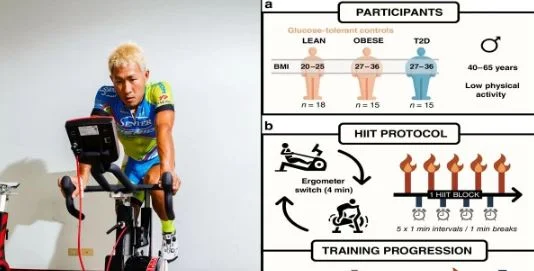
In the study, participants exercised on specially designed stationary bicycles. They completed 30-second intervals of high-intensity cycling, with approximately four minutes of rest between each interval.
Researchers collected blood samples before and after the exercise sessions. The results showed significant changes in 714 proteins in the blood following intense exercise.
By comparison, only seven proteins showed significant changes among participants who performed cycling at a normal pace.
Scientists say this difference indicates that exercise intensity can have a major impact on the body’s biological response.
Which Molecule Becomes Active During Exercise?
During intense physical activity, the body produces and activates various chemical signals. One of these is a molecule known as Lac-Phe, which has received increasing attention from scientists in recent years.
Researchers say Lac-Phe has been linked to biological processes involving appetite, energy use and metabolic changes following exercise.
Various chemical signals produced during intense exercise may affect metabolism and the activity of fat cells. This is why scientists are continuing to investigate the potential benefits of short but intense physical activity.
Potential Effects on Heart Health and Metabolism
Some of the protein changes identified in the study were associated with biological pathways linked to cardiovascular health, metabolism and the body’s fat-processing system.
Researchers also analyzed large-scale human data involving more than 53,000 people.
The analysis found that some proteins affected by intense exercise were associated with healthy aging, cardiovascular health and the risk of metabolic diseases.
These findings are helping scientists better understand how the body responds to short periods of intense physical activity and what types of biological changes occur in the bloodstream after exercise.
Can 3 Minutes of Exercise Replace 90 Minutes of Cycling?
Despite the interesting findings, experts caution that the study should not be interpreted to mean that three minutes of exercise is a complete replacement for 90 minutes of cycling for everyone.
Different forms of exercise affect the body in different ways. Longer periods of moderate exercise can play an important role in improving endurance, supporting heart and lung health and maintaining overall physical fitness.
Similarly, strength training is important for maintaining muscle and bone health. Therefore, the most appropriate exercise routine can vary depending on a person’s age, physical ability, health and daily lifestyle.
A Potential Opportunity for Busy People
One important aspect of the research is that people may not need to spend several hours exercising every day to obtain some of the biological benefits associated with physical activity.
For people who have limited time because of work, business or other responsibilities, short periods of relatively high-intensity physical activity could be a useful option.
However, high-intensity exercise is not equally suitable for everyone. People who have not exercised for a long time or who have an underlying health problem should avoid suddenly starting extremely intense workouts and should consider consulting a doctor or qualified health professional first.
The findings suggest that the benefits of exercise may depend not only on its duration but also on its intensity and the body’s biological response.
However, more research is needed to determine the long-term benefits of short, high-intensity exercise and how suitable this approach is for different groups of people.