Muhammad Amanullah | August 10, 2026
Global oil prices rose again as uncertainty surrounding the Strait of Hormuz continued and peace talks in the Gulf showed no clear breakthrough, raising concerns about the future of energy supplies.
The developments came as Asian stock markets broadly moved higher, with investors closely monitoring both the situation in the Middle East and economic data from the United States that could influence future interest-rate decisions.
No Clear Breakthrough in Gulf Talks
The lack of significant progress in ongoing Gulf peace talks has kept uncertainty elevated across international markets.
Investors are particularly focused on the future of the Strait of Hormuz, one of the world’s most important oil shipping routes. A prolonged disruption or major restriction on maritime traffic through the waterway could have significant consequences for global energy supplies.
Because large volumes of oil pass through the Strait, any escalation in the region can quickly affect crude prices and market expectations.
Iran Signals Progress With Oman
Iran said on Sunday that an agreement with Oman on establishing new routes for ships traveling through the Strait of Hormuz was approaching its final stages.
According to Tehran, discussions between Iran and Oman are continuing and the two countries are close to reaching an arrangement concerning alternative maritime routes.
However, Iran has also indicated that establishing new shipping routes alone would not be sufficient to fully restore normal traffic through the Strait.
Tehran has said the United States would also need to meet additional conditions before the waterway could return to normal operations.
Oil Supplies Remain Restricted
Restricted oil shipments through the Strait have added pressure to global crude markets.
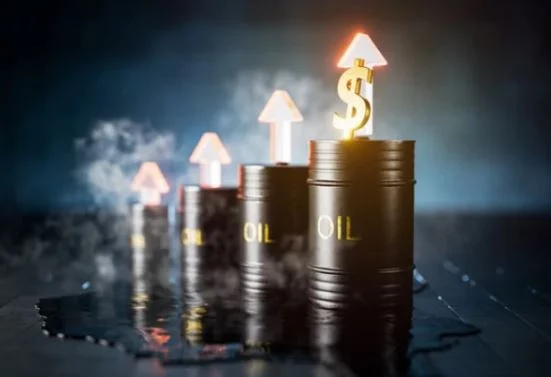
According to market reports, Brent crude rose 0.9% to $84.32 a barrel, while U.S. crude increased 0.7% to $78.74 a barrel.
The gains came as investors assessed the possibility of further disruptions to energy supplies amid continued uncertainty in the Gulf.
The Strait of Hormuz remains particularly important because of its role in transporting oil from the Persian Gulf to international markets.
Asian Stock Markets Move Higher
Despite the rise in oil prices, Asian stock markets broadly recorded gains.
Investor sentiment was supported by recent weaker U.S. employment data, which increased expectations that the Federal Reserve may avoid raising interest rates in the immediate future.
Expectations of stable or potentially lower interest rates have also supported Wall Street, with some of that positive sentiment carrying into Asian markets.
Investors Focus on the Federal Reserve
Recent U.S. economic data have once again shifted investor attention toward the Federal Reserve and its next policy decision.
Weaker employment figures have strengthened expectations that the U.S. central bank may be cautious about imposing additional pressure on economic activity.
Markets are now awaiting further economic indicators to assess the direction of U.S. monetary policy.
Inflation Data Could Be Crucial
The latest increase in energy prices has added significance to the U.S. Consumer Price Index data for July, which is scheduled to be released on Wednesday.
Analysts expect overall inflation to have increased by 0.1% during July, while core inflation is forecast to rise by 0.2%.
A stronger-than-expected inflation reading could alter market expectations about the Federal Reserve’s future interest-rate decisions.
Why Oil Prices Matter for Inflation
Higher crude oil prices can affect much more than the energy sector.
Rising oil prices can push up gasoline and diesel costs, increasing transportation and production expenses. Those higher costs can eventually feed into the prices of goods and services, creating additional inflationary pressure.
This is why central banks, investors and financial markets closely monitor major movements in global oil prices.
Strait of Hormuz Becomes a Key Market Risk
Global markets are now watching the talks between Iran and Oman and any potential agreement over maritime traffic through the Strait of Hormuz.
If an acceptable arrangement is reached and shipping activity becomes more predictable, some of the risk currently priced into the oil market could ease.
However, further delays in negotiations or continued disagreements between Iran and the United States could increase concerns about energy supplies and push crude prices higher.
For now, developments in the Gulf, the volume of oil moving through the Strait of Hormuz and upcoming U.S. inflation data have emerged as some of the most important factors shaping global financial markets.