Muhammad Amanullah
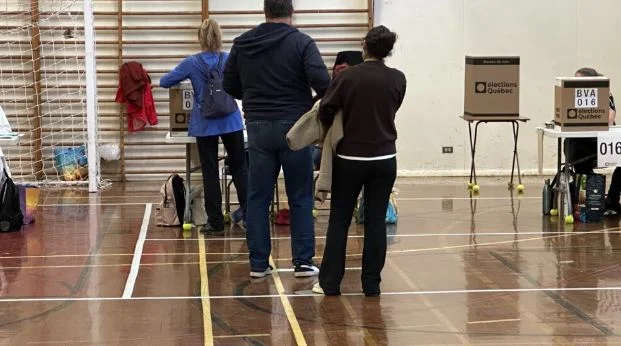
Date: October 5, 2026 The True Post (Web News) —After more than five weeks of campaigning, the election campaign involving five major political parties in the Canadian province of Quebec has reached its final stage, and the decision is now in the hands of voters rather than politicians.
During the campaign, major issues including the economy, healthcare, education, the environment, inflation, the housing crisis, and Quebec’s future within Canada remained central to political debate.
Unusual Competition
Political analyst Daniel Tran said the electoral contest in Quebec has been unusually broad this time. According to him, five political parties appear to be in a strong position to win seats in the provincial legislature.
He said a political landscape of this nature has emerged in Quebec for the first time in nearly half a century, with five parties simultaneously emerging as serious political forces.
Tran said voter priorities continued to shift throughout the campaign, while the political landscape appeared to move in both left- and right-leaning directions.
Voter Priorities
A day before voting in Montreal, different voters were asked about the issues influencing their decisions, with each identifying their own concerns as important factors in determining how they would vote.
One voter, Anina, said that while some people are focused on the issue of Quebec independence, everyday concerns are more important to her.
According to her, affordable groceries, the housing crisis, homelessness and Quebec’s economy are among the issues influencing her voting decision.
Education and Environment
Montreal teacher Ariane Moffet said education and the environment are among the most important issues for her.
According to her, because she works in the education sector, the condition of the education system and environmental policies have particular importance in her electoral decision.
Impact of the United States
For some voters, ongoing issues involving the United States and the situation between the two countries have also influenced their decisions.
Montreal voter Carl Miller said that under the current circumstances, Quebec needs to respond in a united manner to actions taken by the United States.
According to him, the current situation has emerged at a time when internal unity and a common position could be important for Quebec and Canada.
Leaders’ Final Campaign Push
A day before voting, the leaders of Quebec’s major political parties completed the final stage of their campaigns and sought to deliver their last messages to voters.
Parti Québécois leader Paul St-Pierre Plamondon said the election was about change in Quebec. According to him, after eight consecutive years of Coalition Avenir Québec government, people in the province want a new direction.
He expressed hope that the province’s political direction would change significantly following the vote and said his party was capable of bringing about that change.
Parti Québécois in the Lead
Election polls have shown the Parti Québécois in the lead. However, Plamondon urged his workers and supporters to continue reaching out to undecided voters even during the final hours.
The party also intensified its activities in the Montreal area, where it has received comparatively less support over the past decade. The party leadership hopes it can win some seats in these areas this time as well.
First 100 Days
Paul St-Pierre Plamondon has also outlined several priorities for his first 100 days if his party forms the government.
These include allocating a special budget to address homelessness, reducing unnecessary obstacles in government procedures, eliminating certain taxes on used goods, lowering fuel taxes, and reinvesting in community organizations and food banks.
The Independence Question
An important aspect of the Parti Québécois campaign has been the issue of Quebec sovereignty and the possibility of separation from Canada.
The party leader has already said that if his party forms the government, a referendum on Quebec’s sovereignty would be held before the end of its first term.
Opposition political parties have used this promise to warn voters to consider the possible consequences of electing the Parti Québécois.
Formation of Government
It remains unclear whether any single party will win a clear majority after the vote or whether a minority government will be formed. Political analysts say the performance of the conservative party could be particularly important in this situation.
The contest among five parties has changed the traditional two- or three-party electoral landscape.
Voters’ decision will now determine not only the formation of the next government but also the province’s policy direction on the economy, healthcare, education, the environment, housing and Quebec’s constitutional future.
After five weeks of an intense election campaign, all eyes are now on the voting results, as Quebec residents will decide through their ballots the political direction in which the province will move in the coming years.