The True Post (Web News) | MUHAMMAD AMANULLAH | October 20, 2026
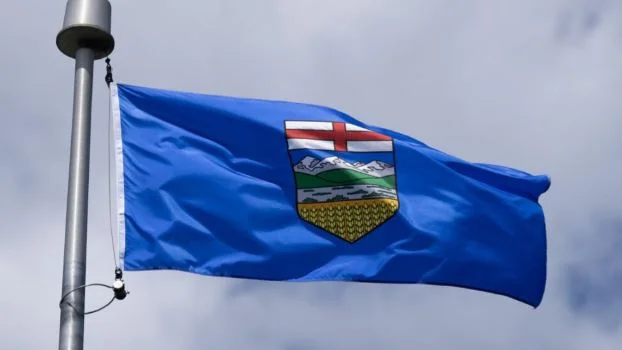
Alberta’s historic provincial referendum has faced delays in the vote-counting process following disruptions at polling stations, leaving voters waiting for official results on 10 questions covering immigration, provincial autonomy, federal institutions and the province’s future within Canada.
The most closely watched proposal is Question 10, which asks voters whether Alberta should remain a province of Canada or whether the provincial government should begin the legal process required to hold a binding referendum on separation.
Under the announced counting procedure, officials will count votes for Question 10 first, followed by the results for Questions 1 through 9 in numerical order.
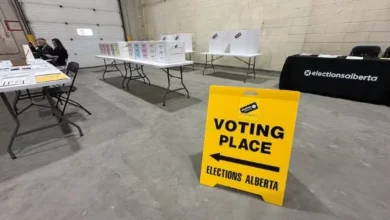
However, problems at a polling station in Edmonton reportedly forced voting hours to be extended until 10 p.m., delaying the count and the provincewide release of results.
An initial unofficial results table showed zero votes recorded for all 10 questions. This indicated that no reportable vote totals were available at that stage and should not be interpreted as support for or opposition to any proposal.
Question 10: Should Alberta Remain in Canada or Pursue a Separation Referendum?
Question 10 addresses Alberta’s future within the Canadian federation. Voters were asked to choose between maintaining the province’s current status within Canada and directing the provincial government to begin the legal process necessary for a binding provincial referendum on separation under Canada’s constitutional framework.
The question does not propose separating Alberta from Canada immediately. Instead, it asks whether the province should move toward a further referendum on independence.
A vote in favour of pursuing that process would signal political support for taking the next steps toward a separation referendum. It would not, by itself, make Alberta independent. Further legal and constitutional requirements would still need to be addressed.
Conversely, support for remaining in Canada would indicate the level of opposition to moving forward with the proposed separation process.
Four Questions Focus on Immigration and Public Services
Questions 1 through 4 address immigration policy, eligibility for publicly funded services and the use of provincial resources. They seek voters’ views on whether Alberta should exercise greater control over these areas.
Question 1: Greater provincial control over immigration
Voters were asked whether Alberta should have more authority over immigration to manage the number of newcomers according to the province’s capacity, prioritize immigrants based on economic needs and give Alberta residents preference for new jobs.
Question 2: Eligibility for provincially funded programs
This question asks whether provincial legislation should restrict access to publicly funded programs, including healthcare, education and other social services, to Canadian citizens, permanent residents and people with immigration status approved by Alberta.
Question 3: A 12-month residency requirement for temporary residents
Voters were asked whether people with temporary legal immigration status should be required to live in Alberta for at least 12 months before becoming eligible for provincial social assistance programs. The proposal assumes that existing eligibility arrangements for Canadian citizens and permanent residents would remain in place.
Question 4: Fees for healthcare and education
This proposal asks whether temporary residents and their family members should pay appropriate fees or additional charges when accessing healthcare and education services.
Together, the four questions address provincial control over immigration, the cost of public services and the eligibility rules applied to newcomers.
Supporters of tighter provincial control argue that Alberta should have greater flexibility to align immigration with local economic and public-service needs. The potential effects on healthcare, education, employment and access to social support would be important considerations in assessing any resulting policy changes.
Question 5: Should Voters Have to Prove Their Canadian Citizenship?
Question 5 asks whether people voting in Alberta provincial elections should be required to provide proof of Canadian citizenship.
Under the proposed approach, voters could be required to present documents such as a passport, birth certificate or citizenship card to establish their eligibility.
The question focuses on how voter eligibility should be verified. Its result will indicate whether voters support introducing an explicit legal requirement for proof of citizenship in provincial elections.
Questions 6 and 7: Judicial Appointments and the Federal Senate
Question 6: Greater provincial authority over judicial appointments
This proposal asks whether Alberta should work with other willing provinces to pursue a constitutional amendment that would give provincial governments the authority to select judges for the provincial Court of King’s Bench and Court of Appeal, rather than leaving those appointments to the federal government.
The proposal concerns the balance of authority between federal and provincial governments in the appointment of judges to these courts.
Question 7: Abolishing the Senate
Voters were also asked whether Alberta should work with other provinces to pursue a constitutional amendment to abolish Canada’s federal Senate.
Both proposals concern the structure of Canada’s federal institutions and the distribution of powers between different levels of government. Even if voters support either measure, implementing it would require the relevant constitutional and legal procedures.
Question 8: Greater Provincial Freedom to Opt Out of Federal Programs
Question 8 asks whether Alberta should support a constitutional change allowing provinces to opt out of certain federal programs involving areas of provincial responsibility, including healthcare, education and social services.
A central element of the proposal is that a province opting out would not lose the associated federal funding. Instead, it would be able to use that money for its own social programs.
The question addresses the relationship between provincial autonomy and federal financial support.
If voters support the proposal, Alberta’s government could use the result to strengthen its position in discussions with other provinces and the federal government. However, putting such an arrangement into effect would require further constitutional and legal action.
Question 9: Giving Provincial Laws Priority in Certain Areas
Question 9 asks whether Alberta should work with other willing provinces to seek a constitutional amendment strengthening provincial authority.
Under the proposed change, provincial laws could take precedence over conflicting federal laws in specified circumstances involving provincial or shared constitutional jurisdiction.
Supporters view the proposal as a way to protect provincial autonomy and clarify the limits of federal authority. Its practical effects, however, would depend on the wording of any constitutional amendment, its legal interpretation and the existing division of powers in Canada.
What Happens After the Results Are Announced?
The results of all 10 questions could shape Alberta’s political and constitutional debate, but each proposal has a different purpose and potential implications.
Question 10 concerns whether to begin the legal process for another referendum on separation. The other nine questions address immigration, access to public services, proof of citizenship for voters, judicial appointments, the Senate and the balance of federal and provincial powers.
Once the official results are released, they should clarify which proposals voters support and which they oppose. However, public support for a proposal does not automatically translate into a change in law or constitutional arrangements.
Several of the proposals would require additional legislation, negotiations with other provinces, federal involvement or constitutional amendments before they could be implemented.
For now, attention remains focused on the vote count and the formal announcement of results. Because Question 10 is scheduled to be counted first, the public’s position on pursuing a separation referendum is expected to emerge before the results of the other nine questions.
The remaining results will then help determine the political direction of Alberta’s debate over immigration, provincial autonomy and its relationship with the rest of Canada.