The True Post (Web News) | MUHAMMAD AMANULLAH | October 20, 2026
A major referendum in Alberta has reignited political debate across Canada over whether the province should remain part of the country or move toward another referendum on separation. The vote, initiated by Alberta Premier Danielle Smith, asks residents whether the province should remain in Canada or proceed toward a second, legally binding referendum on independence.
More than 1.3 million Albertans had already cast their ballots through mail-in voting and advance polling before the main voting day, reflecting the considerable public interest in the province’s political future.
The referendum follows months of political campaigning, public gatherings, speeches and constitutional and economic discussions. Supporters of separation and those advocating continued Canadian unity have actively promoted their respective positions.
However, the debate extends beyond independence. Federal and provincial powers, immigration, taxation, healthcare, education and provincial autonomy have also emerged as major issues.
Why Did Danielle Smith Call the Referendum?
Smith’s United Conservative Party did not include a referendum on separation from Canada in its platform during the 2023 provincial election. Nevertheless, the issue gained prominence in Alberta politics in the years that followed.
According to Smith, federal policies under former Liberal prime minister Justin Trudeau and disagreements between Ottawa and Alberta contributed to growing frustration among some provincial residents.
She said the discontent led to petition campaigns on both sides of the separation debate, with supporters and opponents gathering hundreds of thousands of signatures.
Smith argued that a referendum had become necessary to give Albertans an opportunity to express their views and provide direction for the ongoing debate over the province’s future.
However, the decision has not attracted unanimous support. Opponents of separation argue that Alberta does not need to consider leaving Canada to address its concerns. They warn that the process could deepen political divisions and create economic uncertainty.
Ten Questions on the Ballot
The referendum contains 10 questions. The first nine concern constitutional powers and immigration policy, while Question 10 focuses on Alberta’s potential separation from Canada.
Question 10 asks voters whether Alberta should remain part of Canada or move toward holding a second, binding referendum on separation.
This distinction is important: the current vote does not directly determine whether Alberta will leave Canada. Instead, it seeks public support for moving toward another referendum that would address the separation question.
Even if voters support that proposal, Alberta would not automatically become independent. Further legal, constitutional and political processes would be necessary.
The other nine questions address the balance of powers between the federal and provincial governments and whether Alberta should seek greater control over various policy areas.
Immigration Policy and the Push for Greater Provincial Powers
Immigration is a significant component of the first nine questions. Voters are being asked to express their views on whether Alberta should have greater authority over people entering the province, particularly those arriving for employment.
The debate also concerns access to healthcare and education for people moving to Alberta, including proposals involving additional restrictions and potential fees for certain services.
At the centre of the discussion is how much authority the provincial government should have to manage immigration-related pressures and respond to population growth affecting public services.
Supporters of greater provincial control argue that Alberta should be able to develop policies that reflect its own labour market, population needs and public-service capacity. They believe more provincial authority could help ensure that resources are allocated according to local priorities.
Others have raised questions about the practical consequences of such changes, particularly how a shift in immigration-related powers might affect federal policy, provincial responsibilities and access to public services.
Constitutional Changes and Federal Authority
The constitutional questions seek to measure public support for broader changes to Canada’s federal system.
Among the proposals is whether Alberta should work with other provinces to negotiate a reduction in federal powers and an expansion of provincial authority.
Voters are also being asked about abolishing Canada’s Senate, placing the role of a major federal institution within the wider debate over constitutional reform.
Smith has indicated that public support for the nine questions could strengthen her position in negotiations with Prime Minister Mark Carney.
However, a favourable referendum result would not automatically implement constitutional changes. Any such reforms would still have to follow the relevant legal and constitutional procedures, including applicable requirements involving federal and provincial governments.
Danielle Smith Says She Voted to Keep Alberta in Canada
Although Smith called the referendum, she has said that she personally voted in favour of Alberta remaining part of Canada.
Her position reflects a distinction between the separation question and the broader political objectives behind the referendum. Smith has also sought public support for the other nine questions, viewing them as a way to strengthen Alberta’s negotiating position and secure greater provincial autonomy.
This has created an unusual political dynamic: the premier has placed the question of separation before voters while publicly supporting the province’s continued membership in Canada.
Her position suggests that the referendum is not solely about determining support for independence. It is also intended to bring Alberta’s concerns about federal authority, immigration and provincial powers into sharper focus.
Mark Carney Visits Alberta to Rally Support for Canadian Unity
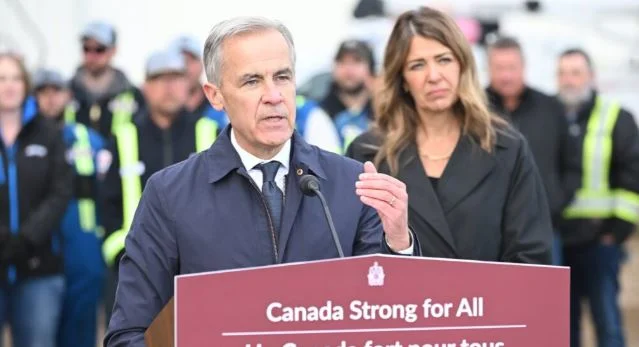
Prime Minister Mark Carney visited Alberta in the week before the referendum, attending events organised by supporters of keeping the province within Canada.
Carney urged residents to consider the implications of the vote and support national unity and the continuation of Canada’s existing federal framework.
His position extended beyond opposing separation. He also called on voters to reject the other nine questions on the ballot.
Speaking at a gathering in Calgary, Carney explicitly urged Albertans to vote against those proposals as well.
The prime minister’s stance indicates that Ottawa’s concerns extend beyond the possibility of Alberta separating from Canada. The proposed changes to constitutional powers and immigration policy are also significant points of disagreement between the federal and provincial governments.
Carney’s message has been that Alberta’s concerns can be addressed through discussions with Ottawa, without necessarily supporting proposals that could substantially alter the country’s federal arrangements.
What Could the Referendum Results Mean?
The outcome carries political significance for Alberta’s government, federal leaders and the province’s independence movement. However, the results of Question 10 must be considered separately from those of the other nine questions.
If voters support proceeding toward another binding referendum on separation, independence advocates could view the result as a major political development. It could also increase pressure on the provincial government to consider the next steps.
Nevertheless, such a result would not itself make Alberta independent.
If the proposal fails to secure sufficient public support, the independence movement could face a political setback. Disagreements over federal authority, immigration and provincial autonomy, however, could remain important issues in Alberta politics.
The results of the first nine questions will also indicate how Albertans view proposals to expand provincial powers and pursue changes to constitutional arrangements and immigration policy.
Ultimately, the referendum represents a significant moment in Alberta’s political debate. It has brought questions about provincial autonomy, national unity and the future of Canadian federalism back to the forefront.
The next stage will depend on how voters respond to the individual proposals and how the provincial government uses the results in its future discussions with Ottawa.