Muhammad Amanullah
Date: October 14, 2026
The True Post (Web News) —
A judicial investigation into a fatal tourist bus crash near the Columbia Icefield in Alberta, Canada, has identified severely worn brakes and shortcomings in vehicle inspections as significant factors in the accident that killed three people and injured 14 others.
According to a report by Global News, citing The Canadian Press, the investigation found that the bus’s braking system was in poor condition and that concerns about its performance had not been adequately addressed.
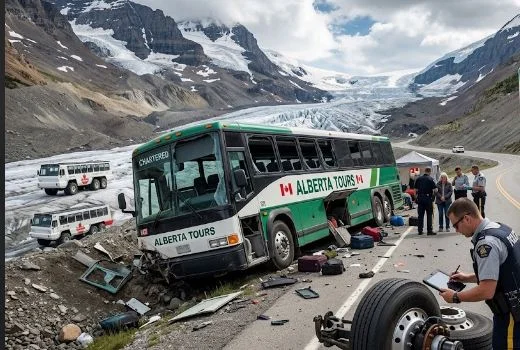
The crash occurred in July 2020 near the Columbia Icefield in Jasper National Park, a popular tourist destination in the Canadian Rockies. The Ice Explorer vehicle was travelling on a road leading towards the Athabasca Glacier when it lost control and plunged down a steep slope.
The findings have raised questions about vehicle maintenance, brake inspections and passenger safety on specialised tourist vehicles operating in mountainous areas.
Bus Overturned After Plunging Down Slope
According to the judicial report, the bus became uncontrollable while descending a slope. It travelled approximately 50 metres down the incline before overturning and coming to rest on its roof.
Three passengers died in the crash, while 14 others sustained injuries.
Alberta Court of Justice Judge Vaughan Myer identified brake problems as a major factor in the accident. The report found that the brakes were badly worn and that inspections had not been carried out adequately. Concerns about the braking system’s performance were also not addressed in a timely manner.
The inquiry heard that the driver had previously complained that the vehicle was not stopping as expected. The bus was equipped with an air-brake system.
According to the report, the sound of the brakes indicated that the driver had attempted to stop the vehicle during the incident.
Bus Gained Speed on Mountain Slope
The report found that the bus was travelling downhill in neutral gear, with its six-wheel-drive system disengaged. This limited the driver’s ability to use the engine to help control the vehicle’s speed.
As a result, the bus accelerated while descending the slope, eventually reaching approximately 50 kilometres per hour.
The report stated that the vehicle’s maximum speed in fourth gear was limited to around 14 kilometres per hour. However, travelling downhill in neutral allowed it to gather speed beyond that level.
Judge Myer identified two principal factors relating to the way the vehicle was operated: travelling downhill in neutral gear and not engaging the six-wheel-drive system. The poor condition of the brakes and shortcomings in their maintenance were also significant findings.
The investigation highlighted how vehicle operation on steep terrain, combined with mechanical problems, can increase the risk of a serious accident.
Seat Belts Identified as a Safety Concern
The judicial report also identified the absence of seat belts as a factor that contributed to the fatalities.
According to the findings, the bus overturned during the crash, and the passengers who died were thrown out of the vehicle.
At the time, seat belts were not mandatory on this type of bus. The judge highlighted the issue as an important concern for passenger safety.
The report also recommended improvements to vehicle inspection records. It said inspection documents should be dated and should clearly identify the work performed on a vehicle, including any repairs carried out.
Such records could help establish whether safety concerns have been identified and addressed, while making maintenance histories easier to review.
Tour Operator Introduces Safety Changes
Brewster, the company operating the buses and also associated with the Pursuit brand, conducted its own internal investigation following the crash.
The company subsequently installed seat belts in its buses and made changes to driver training, according to the report.
The three people who died included 24-year-old Dion Durocher, from North Battleford, Saskatchewan, and two Edmonton residents: 58-year-old Kamleshbhai Patel and 28-year-old Greeva Patel.
The judicial inquiry was intended to examine the circumstances of the crash and recommend measures to help prevent similar incidents. Such an inquiry does not make a final determination of legal liability or fault.
Inquiry Highlights Need for Stronger Safety Measures
The findings underline the importance of maintaining braking systems, conducting thorough vehicle inspections and keeping accurate records of repairs and maintenance.
They also raise questions about passenger protection on specialised tourist vehicles, particularly those operating on steep mountain roads.
The recommendations are intended to improve safety practices and reduce the risk of similar crashes in the future. Whether further regulatory changes will follow depends on the response of the relevant authorities and industry operators.