Muhammad Amanullah | The True Post
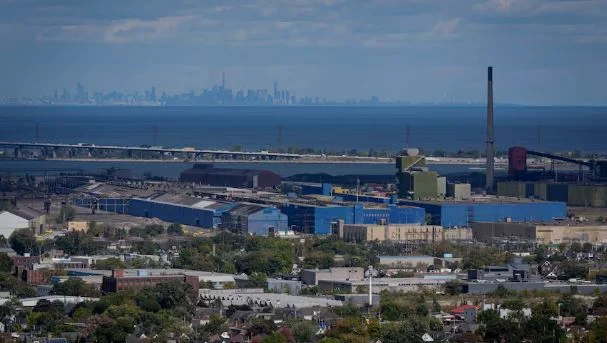
The future of Stelco, the steelmaker based in Hamilton, Ontario, has come under renewed uncertainty after its US owner indicated that he could consider selling the company, as a dispute with the Canadian federal government over job cuts threatens to escalate into a legal battle.
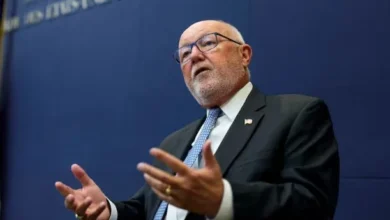
Lourenco Goncalves, chief executive of Cleveland-Cliffs, said in an interview with CBC’s Power & Politics that he had not intended to sell Stelco shortly after acquiring it. However, he suggested that selling the company could become an option after operating it for a period of time.
Goncalves also criticised Industry Minister Mélanie Joly for speaking publicly about potential buyers interested in Stelco’s Canadian assets. He said the company was not currently being offered for sale but indicated that, given the circumstances in Canada, he could consider a sale within approximately a year.
The dispute has intensified following announced job cuts at Stelco’s Hamilton steelmaking operations, raising questions about the company’s obligations under Canada’s foreign investment rules and the future of its workforce.
Federal Government Takes Firm Position on Job Cuts
The disagreement between Cleveland-Cliffs and the Canadian government escalated after the company announced layoffs at its Hamilton steel plant last month.
The company has argued that the cuts were necessary to maintain its business amid US tariffs and difficulties selling steel in the market.
The federal government, however, maintains that Cleveland-Cliffs made commitments when it acquired Stelco in 2024 under the Investment Canada Act. According to the government’s position described in the supplied report, the company agreed to maintain the number of unionised employees at the 2024 level through 2029.
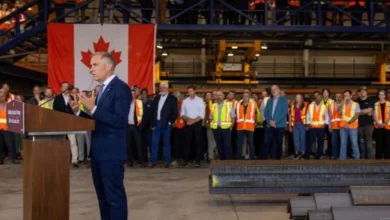
Industry Minister Mélanie Joly reportedly sent a letter to the company last week demanding that it reverse the job cuts. She also warned that the government could pursue legal action if Cleveland-Cliffs failed to meet its commitments.
Potential remedies could include financial penalties or a request for the company to relinquish ownership of Stelco. Any such measures would depend on the applicable legal process and the government’s ability to establish that the company had breached its obligations.
Cleveland-Cliffs Says Selling Stelco Is Now an Option
In his CBC interview, Goncalves said his original motivation for acquiring Stelco was to address competition in the US steel market that he believed was harming his company’s business.
He suggested that Stelco’s steel supplies to the American market had created a competitive challenge for Cleveland-Cliffs, influencing his decision to acquire the Canadian producer.
Joly reportedly questioned whether the company’s intentions could become relevant to the government’s case, particularly if the acquisition had been intended to leave the Hamilton plant inactive.
Goncalves rejected that characterisation and said Cleveland-Cliffs would defend itself if the federal government took the dispute to court.
The disagreement centres not only on the announced layoffs but also on the commitments made when the company purchased Stelco and how those commitments should be interpreted and enforced.
US Steel Tariffs and Canada’s Trade Policy
Goncalves has previously supported US tariffs on steel imports from Canada. Responding to questions about trade policy, he reportedly said his priority was to protect the American steel industry from lower-priced products imported from other countries.
He also called on Canada to adopt stricter measures against foreign steel imports.
According to the supplied report, Goncalves said Cleveland-Cliffs could bring employees back to work if Canada restricted incoming steel more effectively. He argued that recalling workers would be difficult without stronger controls on imports.
Joly, however, maintained that Canada needed to balance support for domestic steelmakers with the needs of manufacturers that rely on imported materials. Canadian steel production does not meet every industrial requirement, making access to some foreign steel necessary for certain businesses.
The competing positions highlight the challenge of protecting domestic jobs while maintaining reliable supplies for Canadian manufacturers.
Potential Buyers Express Interest in Stelco Assets
Joly has previously indicated that potential buyers are interested in Stelco’s Canadian assets.
The minister has also stressed that Cleveland-Cliffs must honour the commitments it made when it acquired the company in 2024.
Cleveland-Cliffs, meanwhile, maintains that the job cuts were necessary to keep the business operating. The company has also reportedly pointed to Stelco’s strongest quarterly performance since the acquisition during the third quarter of this year.
The contrasting positions raise questions about how the company’s financial performance should be assessed alongside its employment commitments and obligations under Canadian investment law.
Even if potential buyers are interested, a sale would involve commercial considerations as well as the legal and regulatory requirements applicable to the company.
What Happens Next?
The central issue is whether Cleveland-Cliffs has breached its commitment concerning Stelco’s unionised workforce.
If the federal government proceeds with legal action, the dispute could become an important test of how employment-related commitments made under Canada’s foreign investment review process are enforced.
The outcome could have consequences beyond Stelco, potentially influencing how foreign investors assess obligations attached to major acquisitions in Canada.
For Hamilton, the stakes are also significant. The steelmaker is an important part of the local industrial economy, and uncertainty over jobs, ownership, and future operations could affect workers, suppliers, and the wider community.
Conclusion
Cleveland-Cliffs has indicated that a sale of Stelco could be considered, while its dispute with the Canadian government over layoffs continues. The federal government says the company must honour its investment commitments, whereas Cleveland-Cliffs argues that the job cuts are necessary to maintain the business.
Whether the disagreement leads to a court case, a negotiated settlement, or a change in ownership remains uncertain. The next developments will be important for Stelco employees, Hamilton’s industrial sector, and the enforcement of foreign investment commitments in Canada.