The Alberta government has announced a reduction in the education portion of property taxes and a three-year freeze on the new rates, a move expected to save taxpayers across the province approximately $100 million.
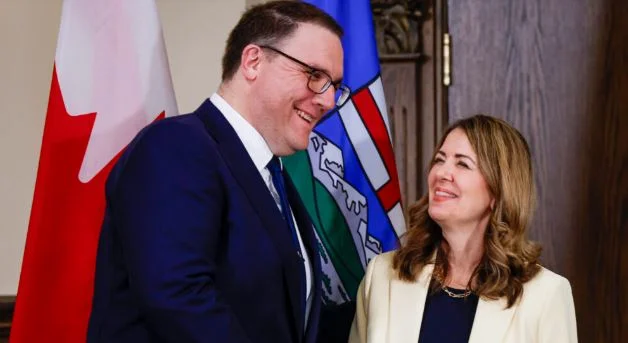
Alberta Premier Danielle Smith announced the decision on Friday at Calgary City Hall alongside several cabinet ministers and Calgary Mayor Jeromy Farkas.
Under the new policy, education property tax rates will be standardised across the province. The revised system will establish uniform provincial education tax rates for residential properties, agricultural land and commercial and other non-residential properties.
As a result, owners of residential properties and agricultural land are expected to pay approximately 7 per cent less in education property taxes compared with this year. Owners of non-residential properties will receive an estimated reduction of around 5 per cent.
Smith said the reduced rates would apply to property assessments conducted by municipalities in 2027. Starting next year, municipalities will calculate education property taxes using the new provincial rates and the assessed value of individual properties.
Dispute Between Alberta Government and Calgary Mayor Over Tax Increases
The announcement comes after disagreements between the provincial government and Calgary Mayor Jeromy Farkas over property tax increases in the city earlier this year.
The average Calgary homeowner faced an additional property tax bill of approximately $390 this year.
Of that amount, only $49 resulted from Calgary City Council’s 1.8 per cent increase in municipal property taxes, while approximately $338 came from a 21 per cent increase in the provincial education property tax rate.
At the time, Mayor Farkas described the provincial government’s decision as the largest provincial property tax increase in Alberta’s history.
Welcoming Friday’s announcement, Farkas said reducing the education tax rate would help ease the overall tax burden on Calgary residents, particularly as the city prepares its next four-year budget.
He explained that approximately 58 cents of every dollar collected through property taxes in Calgary stays with the municipality, while the remaining 42 cents is transferred to the provincial government for education funding.
Additional Tax Relief for Some Property Owners
The Alberta government has also confirmed that property owners in municipalities where the new uniform education tax rate is higher than their existing local rate will receive a one-time special tax credit in 2027.
The measure is intended to protect affected homeowners and other property owners from additional financial pressure during the transition to the new provincial system.
Opposition Rejects Announcement, Calls Tax Freeze Misleading
Alberta Opposition Leader Naheed Nenshi has criticised the government’s announcement, describing the proposed tax freeze as misleading.
Nenshi argued that the government is only partially reversing last year’s education tax increase while the introduction of a uniform provincial rate could shift additional financial responsibilities onto homeowners in some rural communities.
He also said the measure does not go far enough to address the affordability challenges facing Alberta residents, particularly rising living and housing costs.
Government Says Education Funding Will Remain Protected
Alberta Finance Minister Jason Nixon said reducing education property taxes would not affect the funding already allocated to schools under Budget 2026.
According to Nixon, the government will use its general financial resources to compensate for the reduction in revenue resulting from the lower tax rates.
He added that Alberta’s financial position and revenue projections had improved since the provincial budget was presented.
Government estimates released during the summer projected a surplus of approximately $2 billion for the 2026-27 fiscal year. This represented a significant improvement compared with the $9.4 billion deficit forecast in February for the same fiscal year.
The government attributed much of the improvement to higher global oil prices, which were further supported by tensions between the United States and Iran.
As a result, provincial revenue from non-renewable natural resources increased by approximately $9.7 billion.
The latest announcement is expected to provide some financial relief to Alberta property owners while keeping education funding intact. However, the opposition continues to question whether the proposed changes will deliver sufficient savings for families facing rising living costs across the province.